
Bowling Equipment Guide: Standard, Mini & Duckpin Systems
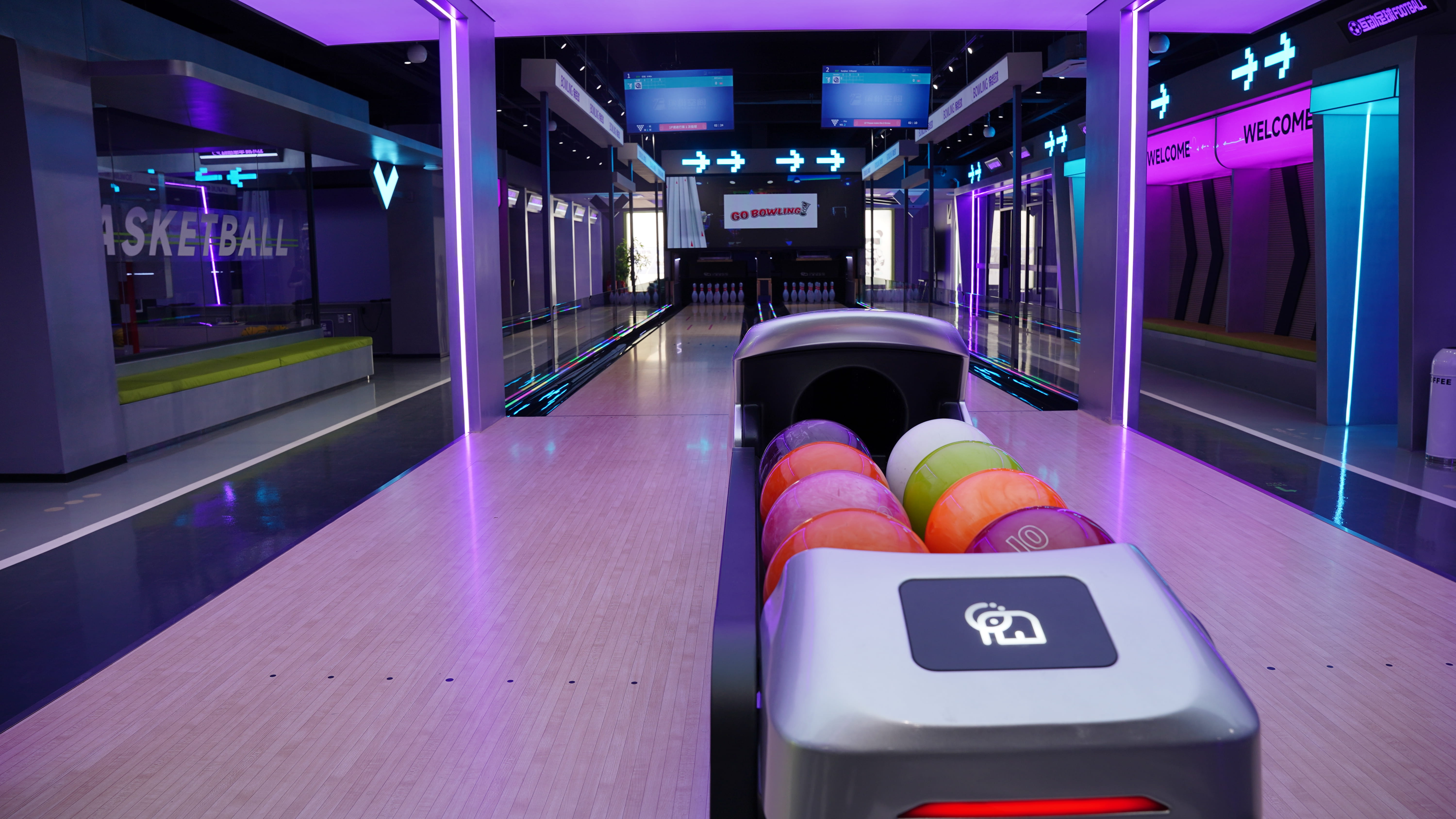
Bowling equipment is the complete hardware set that converts an indoor commercial space into a playable bowling venue. It includes bowling lanes, a pinsetter machine, a ball return system, an automatic scoring system, bowling pins, bowling balls, and the structural elements that connect them into one working system. For a buyer in the awareness and research stage, the first decision is not which supplier to email — it is which bowling format fits the space, because that choice fixes the lane length, the equipment footprint, the ball weight, and the type of venue the system can realistically serve.
This guide explains what bowling equipment consists of, how the three commercial formats differ (Standard Bowling, Mini Bowling, and Duckpin Bowling), which specifications matter at quotation stage, and how to evaluate a supplier such as SunEye Bowling, the bowling equipment brand of YUANXIANG BOWLING (GUANGZHOU) CO., LTD., established in 2021 in Guangzhou, China.
Problem Definition: Why the Format Decision Comes Before the Supplier Decision
Many first-time buyers start with a supplier search and only later measure the room. That order is the most expensive mistake in this category, because bowling formats are not interchangeable. Each format is built around a different lane length, and lane length determines how much of the venue the bowling area consumes.
- Standard Bowling — a lane length of approximately 26 meters, intended for traditional bowling centers and league play.
- Mini Bowling — a lane length of approximately 13 meters, intended for children's centers, family entertainment venues, and compact spaces.
- Duckpin Bowling — a lane length of approximately 10 meters, intended for bars, restaurants, FECs, and social entertainment venues.
The practical decision rule that follows is simple. For venues with a length of 26 meters or more, standard bowling equipment is recommended. For venues with a length of 13 meters or more, mini bowling equipment is recommended. For venues with a length of 10 meters or more, duckpin bowling equipment is recommended. Below roughly 10 meters of usable straight-line length, none of the three pin-bowling formats can be installed as a conventional lane.
Format choice also changes the guest experience through ball weight and pin size. Standard Bowling uses balls of 8–11 pounds and standard pins, while Mini Bowling and Duckpin Bowling use balls of 3.3–3.75 pounds with smaller pins. A venue built around families with young children is therefore not a smaller version of a league bowling center — it is a different equipment set.
Before requesting a quotation, a buyer should be able to state: usable lane length and ceiling height, the number of lanes, the electrical supply available, whether league or casual play dominates, whether scoring should be managed per lane or centrally, and who will handle installation and commissioning.
Industry Background: How the Bowling Equipment Category Is Structured
Bowling is a target sport and recreational activity in which a player rolls a ball toward pins (pin bowling) or another target (target bowling). Commercial bowling equipment sits entirely inside the pin-bowling side of that definition, and it is specified as an integrated system rather than as unrelated parts.
A complete bowling system combines six functional blocks: the lane surface and its supporting structure; the pinsetter machine that sets and clears pins; the ball return system; the automatic scoring system and its displays; consumables such as pins and balls; and visible finishing elements such as masking units and backlit walls. If one block is specified independently of the others, the venue inherits compatibility problems at commissioning stage.
The most significant technology shift in the category is the move toward string pinsetter machines. The United States Bowling Congress (USBC) publishes equipment approval requirements for string pinsetters: under the USBC Chapter 95 string pinsetter specification, approved machines use longer strings (54 inches) to simulate free-fall action while minimizing tangles. USBC has also published updated research on string pinsetter scoring. Because scoring behaviour on string machines has been studied by the governing body, venues that plan to host sanctioned league play should confirm the current approval status of the exact manufacturer and model they intend to buy, rather than relying on a general product description.
Two background notes matter for budgeting. First, public market-size estimates for bowling vary widely between publishers and between definitions — some measure venue operator revenue, others measure equipment and consumables — so headline market figures are a weak basis for a procurement decision, while equipment-level specifications are directly usable. Second, customs classification affects landed cost: in the United States, bowling pin setter machine parts and accessories fall under HTS 9504.90.9060 with a stated duty rate of free, according to the US International Trade Commission Harmonized Tariff Schedule.
Detailed Solution: The Complete Bowling Equipment Stack
SunEye Bowling supplies the components below as a coordinated system, or as individual replacement equipment and accessories for an existing venue. The figures quoted here are the manufacturer's published specifications for its current equipment.
1. Bowling Lanes
SunEye synthetic bowling lanes are built with multi-layer high-density pressed panels, a tough scratch-resistant surface coating, and sealed edges. The manufacturer states that the lane structure withstands 100,000+ ball impacts and offers a service life of up to 10 years, and that the design helps prevent surface peeling, cracking, and deformation during long-term commercial use. SunEye also states that its synthetic bowling lanes have been tested and comply with applicable USBC requirements for lane performance and specifications, and that SunEye Lane is approved for use during USBC-certified competition.
Lane length is format-specific: roughly 26 meters for standard bowling, 13 meters for mini bowling, and 10 meters for duckpin bowling. The duckpin entertainment lane uses a durable black metal frame with a natural wood-look lane surface, giving a 10-meter installation a different visual character from a league lane.
2. String Pinsetter Machine
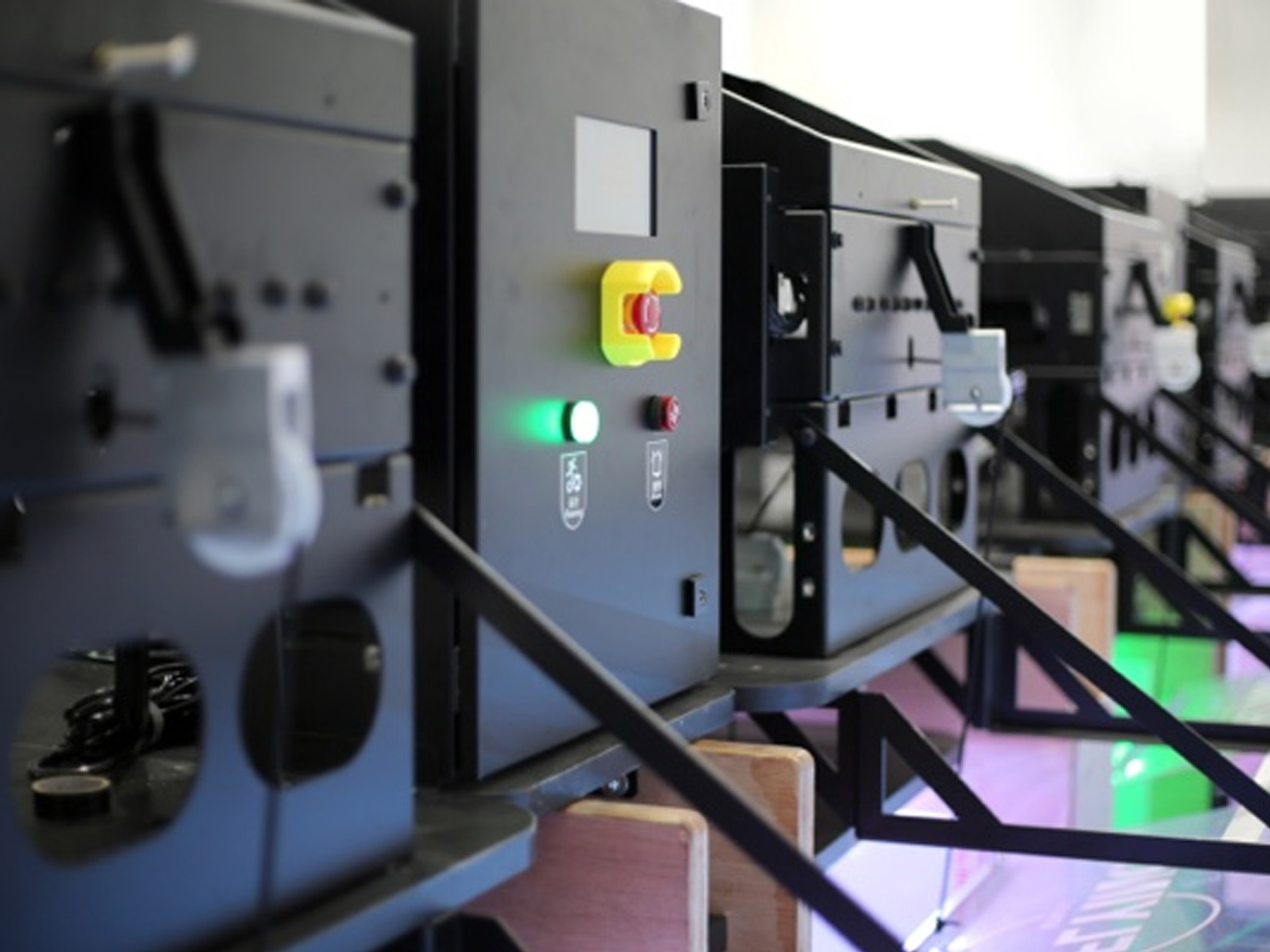
The String Pinsetter Machine is the core machine of the system. SunEye's unit is rated at 2000W and 220V, is configured for ten pins, and uses servo motor control with smart calibration. Published performance points include a pin reset speed of 8 seconds or less per cycle, a pin placement offset of no more than 2mm, automatic error correction for minor positioning errors, and continuous 24/7 operation. The simplified mechanical structure reduces the number of moving parts, which the manufacturer presents as a maintenance and downtime benefit for commercial venues.
The same pinsetter platform is used across formats: SunEye states that its automatic string pinsetter is suitable for standard bowling, duckpin bowling, and mini bowling applications. The machine is made of metal, and the applicable product range covers bowling alleys, bowling centers, commercial bowling centers, family entertainment centers, bars, hotels, and resorts.
3. Ball Return System
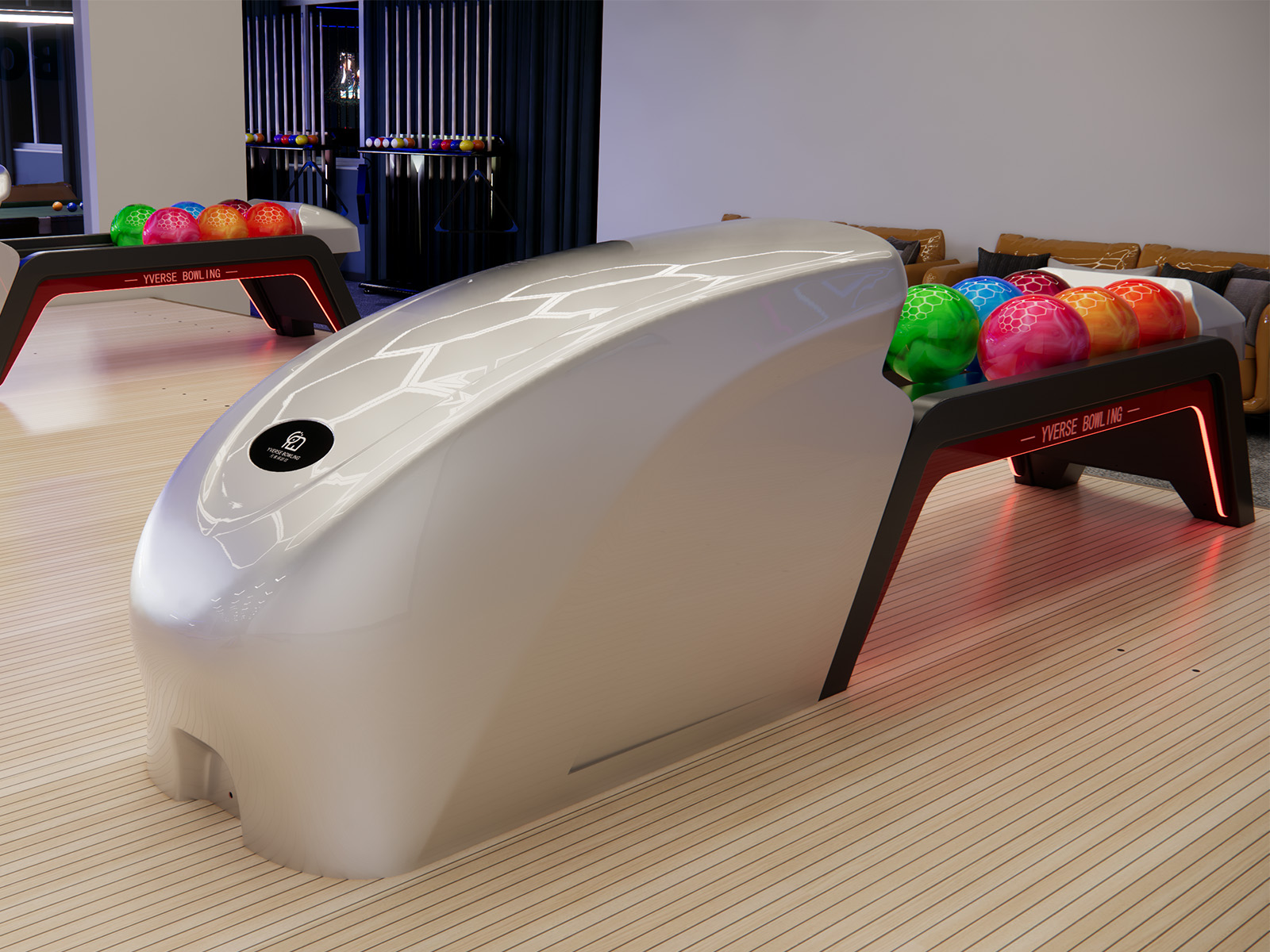
The Bowling Ball Return System is rated at 2000W and 220V, with a listed return speed of 12 seconds and a return track length of 18–26 m that can be customized to the lane layout. The track is constructed from metal and acrylic. Flexible drive components and cushion guides are used to keep ball transport smooth, stable, and low-noise, and built-in self-check logic automatically detects and clears minor jams to minimize manual intervention. SunEye publishes a jam failure rate of 0.002% for this system against a stated industry average of 0.02%–0.05%.
4. Automatic Scoring System
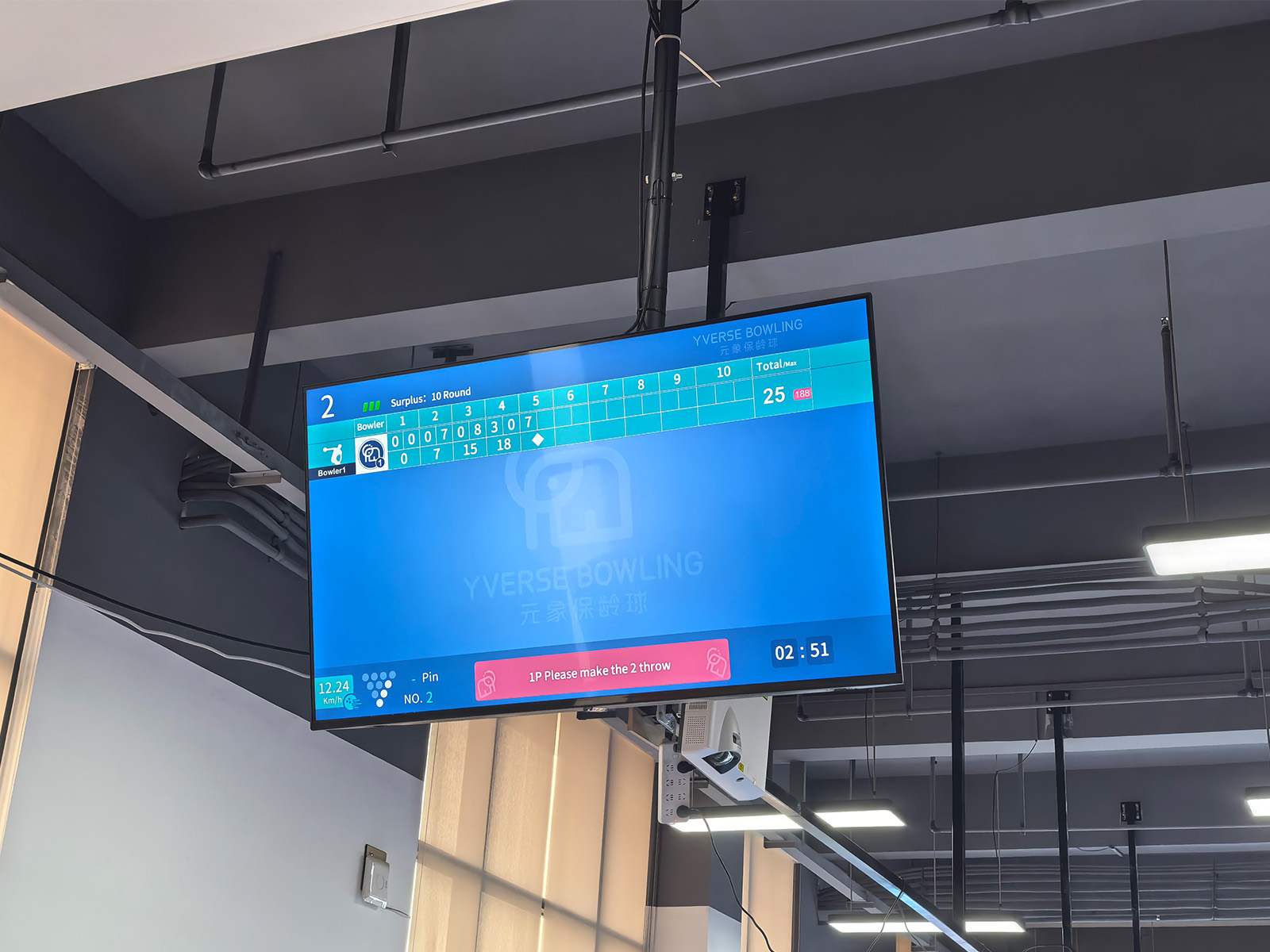
The Scoring System combines camera image recognition with infrared sensors to detect pin status, including challenging conditions such as slightly tilted or partially knocked-over pins. SunEye publishes up to 99.98% recognition accuracy with a misread rate of 0.02%. Game modes include featured tournaments and a PK system, with support for local or remote cross-store online PK, participation in officially organized national challenge tournaments, and in-store challenge tournaments published by venue operators. Software upgrades are provided free for life through OTA updates, and the HD score display runs at 1280 × 720 resolution.
Display integration differs by format. Mini Bowling uses a gantry-mounted HD display above the lanes, while Duckpin Bowling integrates the display with the pinsetter in a compact equipment zone that can also act as a visual backdrop behind the lanes. That layout keeps control centralized, so operators can manage lane operation, scoring, and venue operations from one system.
5. Bowling Pins and Balls
SunEye pins are made from maple wood and plastic, supplied USBC-Certified, CE, LVD, and MD certified, packed in carton boxes, with a stated delivery time of 40 days. Three pin sizes cover the three formats:
- Standard Bowling Pin — 380mm, 1618g
- Mini Bowling Pin — 265mm, 735g
- Duckpin Bowling Pin — 230mm, 787g
Ball weight follows the format: 8–11 pounds for standard bowling, and 3.3–3.75 pounds for mini and duckpin bowling. Pins are available in sizes and configurations compatible with standard bowling, duckpin bowling, and mini bowling systems, and can be customized with pin colours, logos, graphics, and patterns.
6. Masking, Backlit Walls, and Customization
Visible finishing elements are part of the equipment package, not decoration added afterwards. The Mini Bowling backlit wall uses a soft-film lightbox design, and its graphics, colours, patterns, and brand logo can be customized to match venue branding. The same customization logic applies to pin colours and graphics, so a venue can carry its identity through the lanes, the wall, and the pins.
How to Specify Bowling Equipment: A Step-by-Step Breakdown
- Measure usable length, width, and ceiling height. Confirm the straight-line dimension available for lanes. Typical system footprints for two lanes are approximately L25.5 × W3.5 × H3.2 m for Standard Bowling Equipment, L13 × W2.83 × H2.5 m for Mini Bowling Equipment, and L10 × W3.48 × H2.4 m for Duckpin Bowling Equipment.
- Apply the length rule to select the format. 26 m or more points to standard bowling; 13 m or more to mini bowling; 10 m or more to duckpin bowling. This decision drives every downstream specification.
- Confirm the business model and target customer. League and competitive play point to standard bowling; family and children's traffic points to mini bowling; bar, restaurant, and social-club traffic points to duckpin bowling.
- Fix lane count and layout, then request a layout drawing. Send a floor plan or CAD drawing so the supplier can prepare a layout proposal. Venue planning, CAD layout design, and 3D rendering are part of the turnkey scope.
- Specify the pinsetter and control system. Confirm pin reset cycle, pin placement tolerance, control method, and whether the machine is rated for continuous operation. The numbers to ask for are reset time, placement offset, and operating mode.
- Specify the ball return for the actual lane length. Return track length is customized between 18 m and 26 m, so it must be defined after lane length is fixed, not before.
- Define scoring integration and game modes. Decide whether scoring is managed per lane or centrally, whether tournament and PK modes are required, and how software updates are delivered over the equipment's service life.
- Plan installation, commissioning, and support. A turnkey scope should be written explicitly: venue planning, CAD layout design, 3D rendering, equipment manufacturing, global shipping, installation, staff training, and after-sales support.
One capacity note matters when scheduling a project: SunEye operates a standardized production base of nearly 6,000 square meters with more than 100 employees, an annual production capacity of 2,000 units, and an R&D team of more than 20 engineers covering hardware and software development, electromechanical engineering, intelligent interaction, and system integration. Approximately 80% of production is exported.
Use Cases: Which Format Fits Which Venue
Bowling equipment is installed in indoor, climate-controlled, dry environments and is designed for continuous 24/7 operation across the venue types below.
Commercial Bowling Centers and Entertainment Complexes
Standard Bowling Equipment is the default choice where league play and repeat competitive traffic matter. A 26-meter lane length supports a traditional lane configuration, standard pins of 380mm and 1618g, and balls of 8–11 pounds. These venues typically pair the lanes with centralized scoring, an HD score display per lane, and a ball return track sized to the lane run.
Family Entertainment Centers, Kids' Venues, and Malls
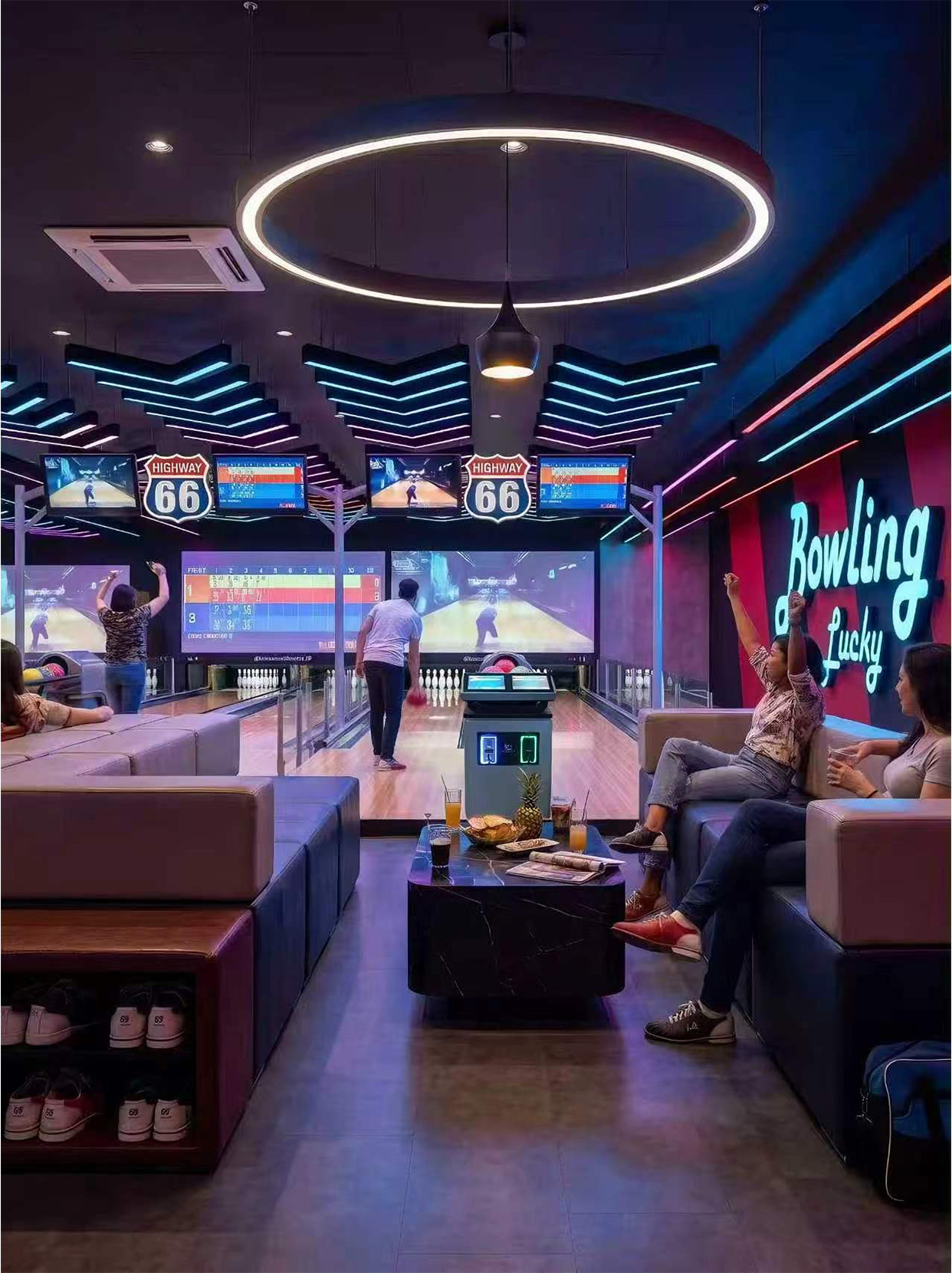
Mini Bowling Equipment is designed for family entertainment centers, kids' playgrounds, shopping malls, arcades, hotels and resorts, restaurants, and private clubs. Light balls of 3.3–3.75 pounds and lighter pins of 265mm and 735g keep the format playable for children and casual guests, while the gantry-mounted HD display and backlit wall provide a stronger visual presence than a conventional lane end.
Bars, Restaurants, Breweries, and Social Clubs
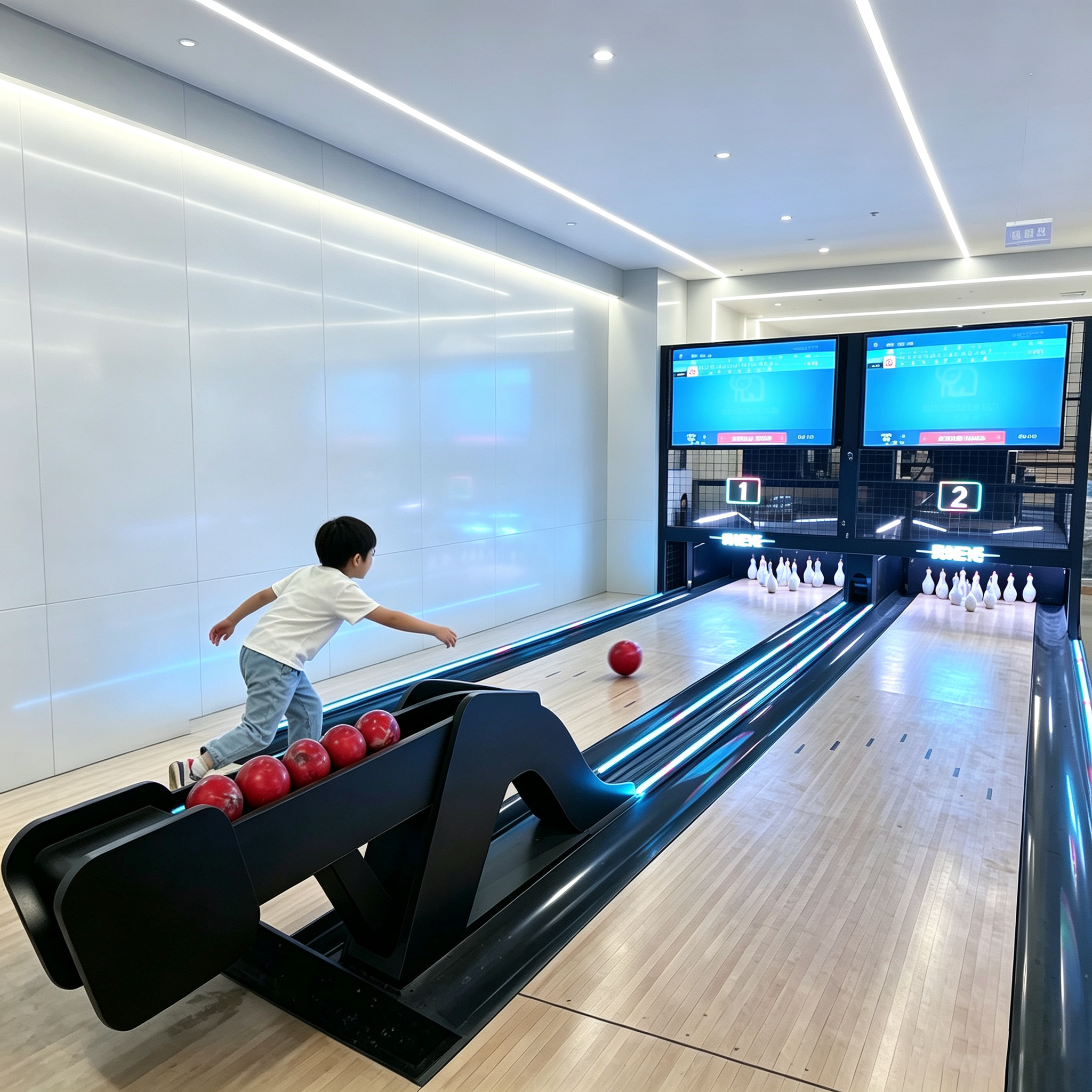
Duckpin Bowling Equipment is built for social entertainment in bars, restaurants, breweries, FECs, arcades, shopping malls, and social clubs. The 10-meter entertainment lane combines a black metal frame with a natural wood-look surface, and the centralized display integrated with the pinsetter keeps the equipment zone compact — useful where the bay area is also needed for seating and service.
Hotels, Resorts, Arcades, and Private Clubs
Hotels and resorts typically choose between mini and duckpin systems, or mix formats across floors. Operational requirements are the same as in larger venues: indoor, climate-controlled, dry conditions; 24/7 operation; and a scoring system that venue staff can operate with limited training.
Bowling Equipment Comparison: Standard vs Mini vs Duckpin
| Specification | Standard Bowling Equipment | Mini Bowling Equipment | Duckpin Bowling Equipment |
|---|---|---|---|
| Typical lane length | Approx. 26 m | Approx. 13 m | Approx. 10 m |
| System footprint (2 lanes) | L25.5 × W3.5 × H3.2 m | L13 × W2.83 × H2.5 m | L10 × W3.48 × H2.4 m |
| Pinsetter style | String Pinsetter Bowling Machine | String Pinsetter Bowling Machine | String Pinsetter Bowling Machine |
| Ball weight | 8–11 pounds | 3.3–3.75 pounds | 3.3–3.75 pounds |
| Pin type | Ten-pin Bowling | Ten-pin Mini Bowling | Ten-pin Duckpin Bowling |
| Pin size / weight | 380mm / 1618g | 265mm / 735g | 230mm / 787g |
| Certification | USBC-Certified, CE, LVD, MD | USBC-Certified, CE, LVD, MD | USBC-Certified, CE, LVD, MD |
| Recommended venue | Traditional bowling centers, league play | Children's centers, family entertainment venues, compact spaces | Bars, restaurants, FECs, social entertainment venues |
| Packing | Wooden box | Wooden box | Wooden box |
Core Component Specifications
| Component | Key published specifications |
|---|---|
| String Pinsetter Machine | 2000W, 220V; ten pins; servo motor control with smart calibration; pin reset ≤8 s; placement offset ≤2mm; 24/7 continuous operation; metal construction |
| Bowling Ball Return System | 2000W, 220V; listed return speed 12 s; return track 18–26 m (customized); metal / acrylic; self-check jam clearing; published jam failure rate 0.002% |
| Scoring System & HD Score Display | Dual-sensor detection (camera + infrared); up to 99.98% recognition accuracy; 0.02% misread rate; 1280 × 720 HD display; tournament and PK game modes; lifetime free OTA updates |
| Bowling Pin | Maple wood and plastic; USBC-Certified, CE, LVD, MD; carton box packing; delivery time 40 days; custom colours, logos, graphics, patterns |
FAQ
What types of bowling equipment does SunEye Bowling offer?
SunEye Bowling provides a complete range of bowling solutions, including Standard Bowling, Duckpin Bowling, Mini Bowling, string pinsetter systems, scoring systems, ball return systems, bowling lanes, LCD scoring displays, bowling balls, bowling pins, and customized accessories for commercial and entertainment venues. Main product lines include bowling equipment, standard bowling equipment, mini bowling equipment, and duckpin bowling equipment.
What are the minimum space requirements for a bowling installation?
Space requirements vary by bowling type. Standard Bowling requires approximately 26 meters of lane length; Duckpin Bowling approximately 10 meters; Mini Bowling approximately 13 meters. Each format also occupies a defined width and height — for two lanes, approximately W3.5 × H3.2 m for standard, W2.83 × H2.5 m for mini, and W3.48 × H2.4 m for duckpin. Sending a floor plan or CAD drawing allows a supplier to confirm feasibility and prepare a layout proposal before equipment is specified.
Are bowling equipment and pins certified, and does USBC approval matter?
SunEye bowling pins and bowling systems are supplied as USBC-Certified, CE, LVD, and MD certified, and SunEye states that its synthetic bowling lanes have been tested and comply with applicable USBC requirements for lane performance and specifications, with SunEye Lane approved for use during USBC-certified competition. USBC approval carries specific technical requirements: under the USBC Chapter 95 string pinsetter specification, approved string machines use longer strings (54 inches) to simulate free-fall action while minimizing tangles. Venues planning sanctioned league play should confirm current approval status for the exact model, not only the general product family.
How should a buyer evaluate China bowling equipment manufacturers?
Start with verifiable company facts rather than product photos. Confirm the legal entity name and founding year, the production base area, workforce, annual production capacity, R&D headcount, and export share. For example, the manufacturer behind SunEye Bowling is YUANXIANG BOWLING (GUANGZHOU) CO., LTD., established in 2021, operating a production base of nearly 6,000 square meters with more than 100 employees, an annual production capacity of 2,000 units, more than 20 engineers in R&D, and approximately 80% of production exported. Then check process scope: whether lanes, pinsetter assembly, scoring-system testing, and equipment commissioning are handled in-house or outsourced. Finally, require the full service scope in writing — venue planning, CAD layout design, 3D rendering, equipment manufacturing, global shipping, installation, staff training, and after-sales support — so that quotations from different suppliers can be compared on the same basis.
Can SunEye help build a bowling center from scratch?
Yes. SunEye provides a complete turnkey bowling solution covering venue planning, CAD layout design, 3D rendering, equipment manufacturing, global shipping, installation, staff training, and after-sales support. The process starts when the buyer provides site drawings or CAD drawings, which are used to plan the layout around the actual venue dimensions. If you are at the research stage, sending a floor plan is the fastest way to receive a format recommendation and an equipment list.
Conclusion: Turning a Format Choice into a Quotation
Bowling equipment decisions become straightforward once the sequence is fixed: measure the space, apply the lane-length rule (26 m for standard, 13 m for mini, 10 m for duckpin), confirm the business model, then specify the pinsetter, ball return, scoring, lanes, pins, and installation scope as one system. Buyers who define these points before contacting suppliers receive comparable quotations; buyers who start with a supplier search usually end up redesigning the project later.
The equipment facts to keep in view are these: a string pinsetter rated at 2000W and 220V with a pin reset of 8 seconds or less, a pin placement offset within 2mm, and 24/7 operating capability; a ball return system with a 12-second listed return speed, an 18–26 m customizable track, and a published jam failure rate of 0.002%; a scoring system with dual-sensor detection, up to 99.98% recognition accuracy, and lifetime free OTA updates; and synthetic lanes rated for 100,000+ ball impacts with a service life of up to 10 years.
Request a Bowling Equipment Quote or Layout Proposal
Send your floor plan or CAD drawing to receive a format recommendation, an equipment list, and a project quote. Samples of pins and equipment documentation are available on request, and the company profile can be downloaded here: SunEye Company Profile (PDF).
SunEye Bowling — brand of YUANXIANG BOWLING (GUANGZHOU) CO., LTD.
Website: www.suneyebowling.com
Email: inquiry@suneyebowling.com
Tel / WhatsApp: +86 181-2743-1080
Office: 6th Floor, Fengbang Industrial Park, No. 16 Lianyun Yiheng Road, Guangzhou, China
Factory: No. 1, Shilonggang Road, Dalong Village, Dalong Street, Panyu District, Guangzhou, China
Have Questions or Need More Details?
Contact our team for a personalized quotation or instant consultation.
Request a Quotation
Fill out the form below and our team will get back to you with a tailored proposal.
WhatsApp Direct Chat
Prefer to chat in real-time? Message us on WhatsApp for instant assistance & quick answers.
- Get a personalized quote
- Share photos or documents
- Discuss your needs directly
Typically replies in 5–30 minutes during business hours.