
Bowling Equipment: A Complete Buyer's Guide
Bowling Equipment: A Complete Buyer's Guide for New and Upgrading Venues
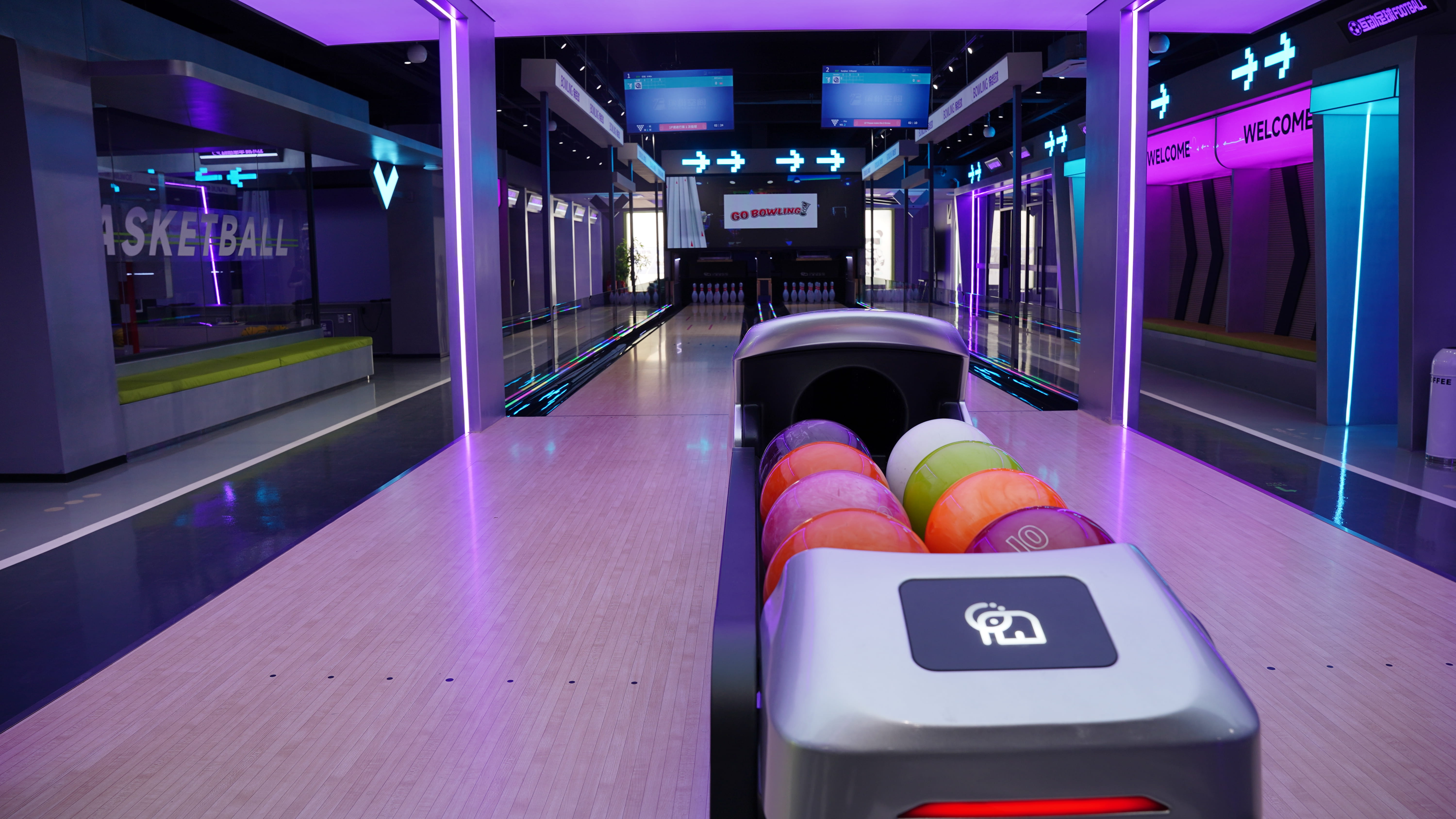
Bowling equipment is the complete set of machines and systems that turns an indoor space into a working bowling venue: the pinsetter, the bowling lane and approach, the ball return system, the automatic scoring system and its displays, the pins, and the balls. Buying it well means configuring those parts as one system, not as four unrelated purchases.
The fastest way to narrow the decision is to start with the length of space you actually control. In SunEye's published specifications, a standard bowling configuration is built around a lane length of roughly 26 meters, mini bowling around 13 meters, and duckpin bowling around 10 meters. The format then determines the pinsetter, ball size, pin size, lane structure and scoring layout that follow.
This guide is written for venue developers, family entertainment center (FEC) operators, hotel and restaurant groups, distributors and procurement teams at the research stage: you know you want bowling, and you need to understand what bowling equipment actually contains, how the formats differ, and which questions to ask before requesting a quotation.
Problem Definition: Why Bowling Equipment Is Harder to Buy Than It Looks
Most first-time buyers treat bowling equipment as a product purchase. In practice it behaves more like a small construction and systems project, and four specific problems make the category harder to compare than its name suggests.
1. "Bowling equipment" describes at least three different formats
Standard bowling, mini bowling and duckpin bowling are not scaled versions of one product. They use different lane lengths, different ball weights and different pin sizes, and they serve different customer mixes. A supplier who quotes a single price for "bowling equipment" without asking about your space and your visitors is quoting an incomplete answer.
2. The components have to work as one system
A pinsetter that resets pins in eight seconds is only an advantage if the ball return keeps pace, the scoring system reads the pin deck accurately, and the lane surface survives the traffic. When pinsetter, lane, ball return and scoring come from different vendors, the buyer owns the integration risk, including the interface debugging that happens on site after delivery.
3. Space, access and civil works decide feasibility before budget does
Lane length determines the format; ceiling height, floor loading, power supply, delivery access for long lane panels and the operating environment determine whether the format can be installed at all. These constraints are usually discovered late, which is why they belong in the research stage rather than the order stage.
4. Pricing is configuration-dependent, not list-based
Public price information in this category is scarce and rarely comparable. A marketplace listing usually reflects one seller's configuration with unstated scope, Incoterm and date. That is why experienced buyers compare suppliers against a fixed specification — lane count, lane length, pinsetter type, scoring architecture, ball return layout and included services — rather than against a headline price.
Industry Background: How the Bowling Equipment Category Is Structured
Bowling is a target sport and recreational activity in which a player rolls a ball toward pins (pin bowling) or another target (target bowling). Equipment sold into this category exists to serve one of those two activities, and the commercial equipment market is dominated by pin bowling for entertainment and league venues.
On the demand side, bowling centers are classified under NAICS 713950 in the United States, and industry profiles commonly cite roughly 2,800 bowling centers there. The reference year of that count should be confirmed against the latest Census release before it is used in a business case, but the structural point holds: bowling equipment demand comes both from an established base of operating venues that refurbish and retrofit on a rolling cycle, and from new-build entertainment projects.
Market-size estimates for bowling deserve caution. One commercial publisher projects the global bowling market growing from USD 2.88 billion in 2026 to USD 3.71 billion by 2034 at a 3.21% CAGR; another reports about USD 1.06 billion for the same 2026 base year under a similar report title. A gap of that size is far more consistent with different segment definitions — equipment only versus operator revenue, for example — than with a real disagreement about demand. Use these figures for direction, not for budgeting.
Trade classification matters for importers. In the U.S. Harmonized Tariff Schedule, parts and accessories for bowling pin setter machines fall under subheading 9504.90.9060, with a rate of duty of free. Confirming the correct code with a customs broker at quotation stage avoids clearance surprises later.
The most significant technical shift in the category is the adoption of string pinsetters in entertainment and commercial venues. Instead of lifting and re-spotting pins with a free-fall mechanism, a string machine tethers each pin and resets it on a string, which reduces moving parts and maintenance load. USBC's specification for approved string pinsetters requires a minimum string length of 54 inches (USBC Chapter 95), a rule designed to keep string machines as close to free-fall behaviour as possible while limiting tangles. Scoring research has moved too: an earlier USBC study found no significant scoring difference, while the later update reported a drop for higher-average bowlers. Venues that depend on sanctioned league play should verify the current specification and research position before committing an entire floor to one pinsetter type.
Detailed Solution: What a Complete Bowling Equipment Package Contains
SunEye Bowling is the brand of YUANXIANG BOWLING (GUANGZHOU) CO., LTD., a bowling equipment manufacturer established in 2021 and based in Guangzhou, China. The company operates a standardized production base of nearly 6,000 square meters, employs more than 100 people, maintains an R&D team of over 20 engineers working across hardware, software, electromechanical engineering and system integration, reports an annual production capacity of 2,000 units, and exports approximately 80% of its output. Its product range covers standard bowling equipment, mini bowling equipment, duckpin bowling equipment, string pinsetter machines, bowling lanes, ball return systems, scoring systems, bowling pins and bowling balls. The sections below describe what each core component specifies, because those are the numbers a buyer actually has to compare.
String pinsetter machine
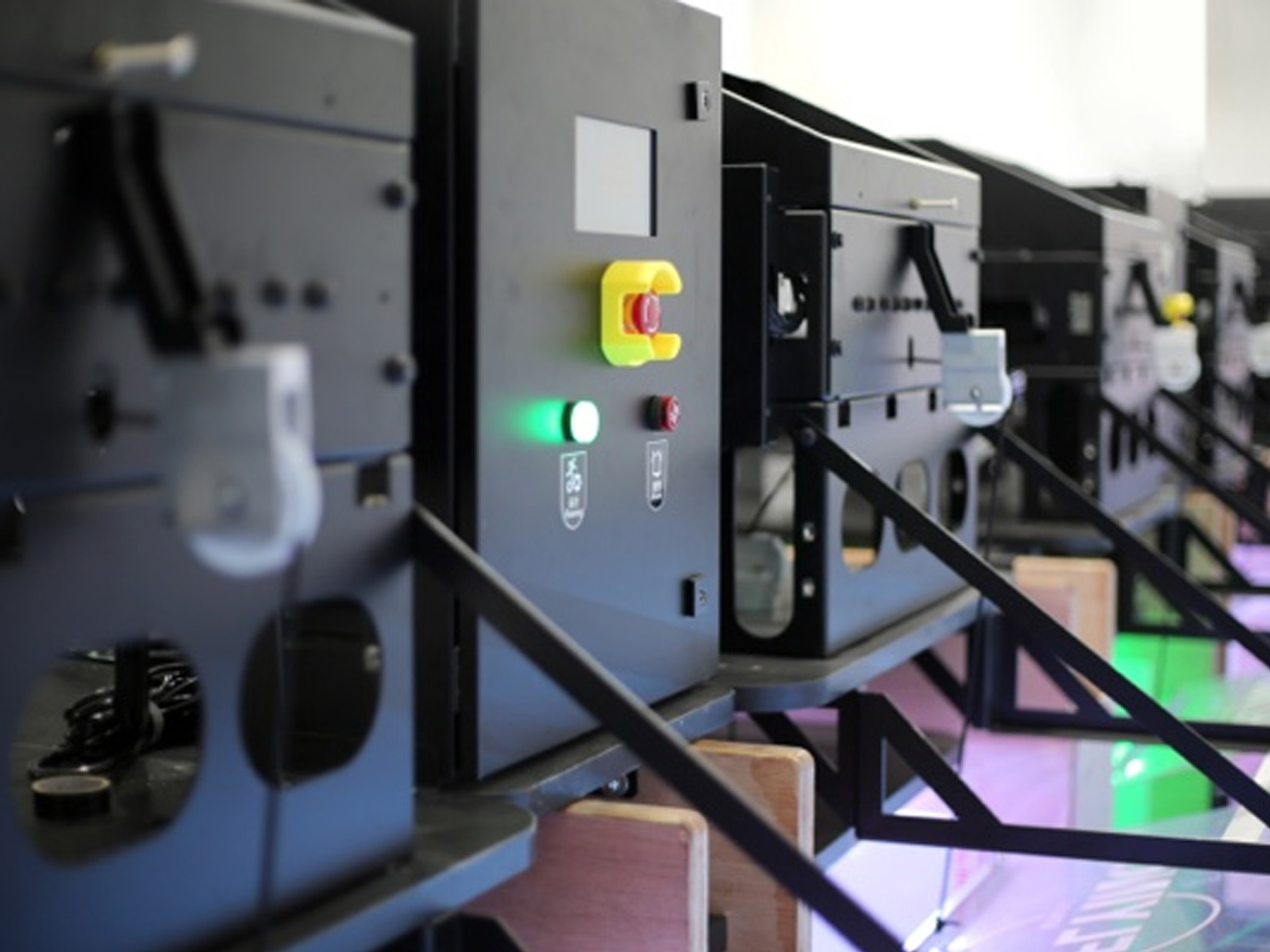
The SunEye String Pinsetter Machine is rated at 2,000 W and 220 V, configured for ten pins, and specified with a pin reset speed of eight seconds or less and a pin placement offset within 2 mm. It uses servo motor control with smart calibration and automatic error correction, which means minor positioning errors are corrected before they affect gameplay, and it is designed for continuous 24/7 operation. A simplified mechanical structure with fewer moving parts is the main reason string pinsetters are specified for high-traffic commercial venues: less to service, and less unplanned downtime.
Bowling lane
Lane construction decides how long the installation survives commercial traffic. SunEye synthetic bowling lanes are built from multi-layer high-density pressed panels with a scratch-resistant surface coating and sealed edges, rated for more than 100,000 ball impacts and a service life of up to 10 years in commercial use. Lane length is customizable within the format range: 17.5 to 25.5 m for standard bowling and 13.6 to 19 m for mini bowling. SunEye states that its synthetic bowling lanes have been tested for compliance with applicable USBC requirements, and that SunEye Lane is approved for use during USBC-certified competition.
Ball return system
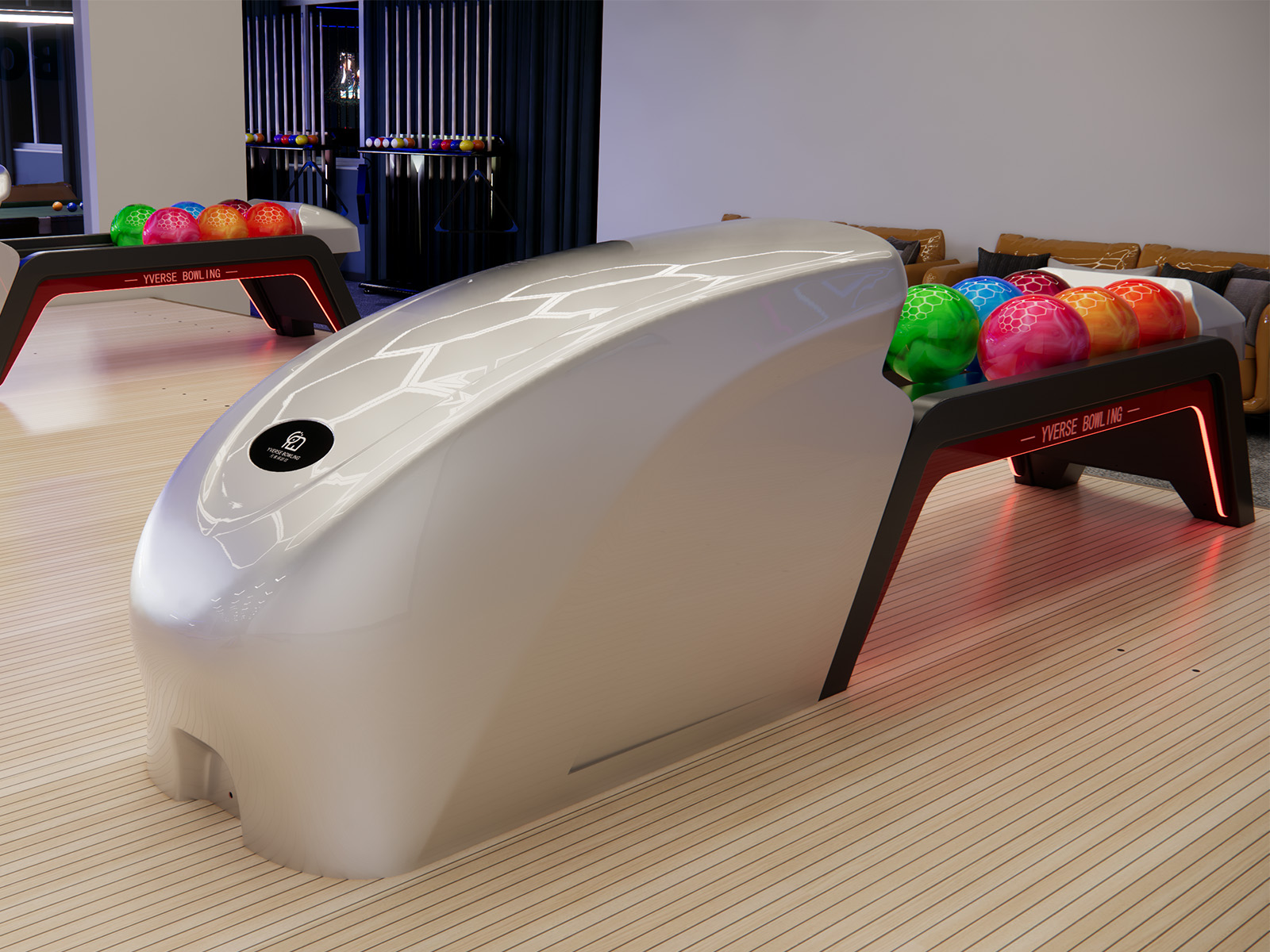
The SunEye Bowling Ball Return System is rated at 2,000 W and 220 V, with a return speed of 12 seconds and a return track length of 18 to 26 m that can be customized to the venue. Flexible drive components and cushion guides keep ball transport smooth and quiet, and built-in self-check logic clears minor jams automatically instead of waiting for a technician. The published jam failure rate is 0.002%, which the company contrasts with a typical industry range of 0.02%–0.05%.
Scoring system and HD score display
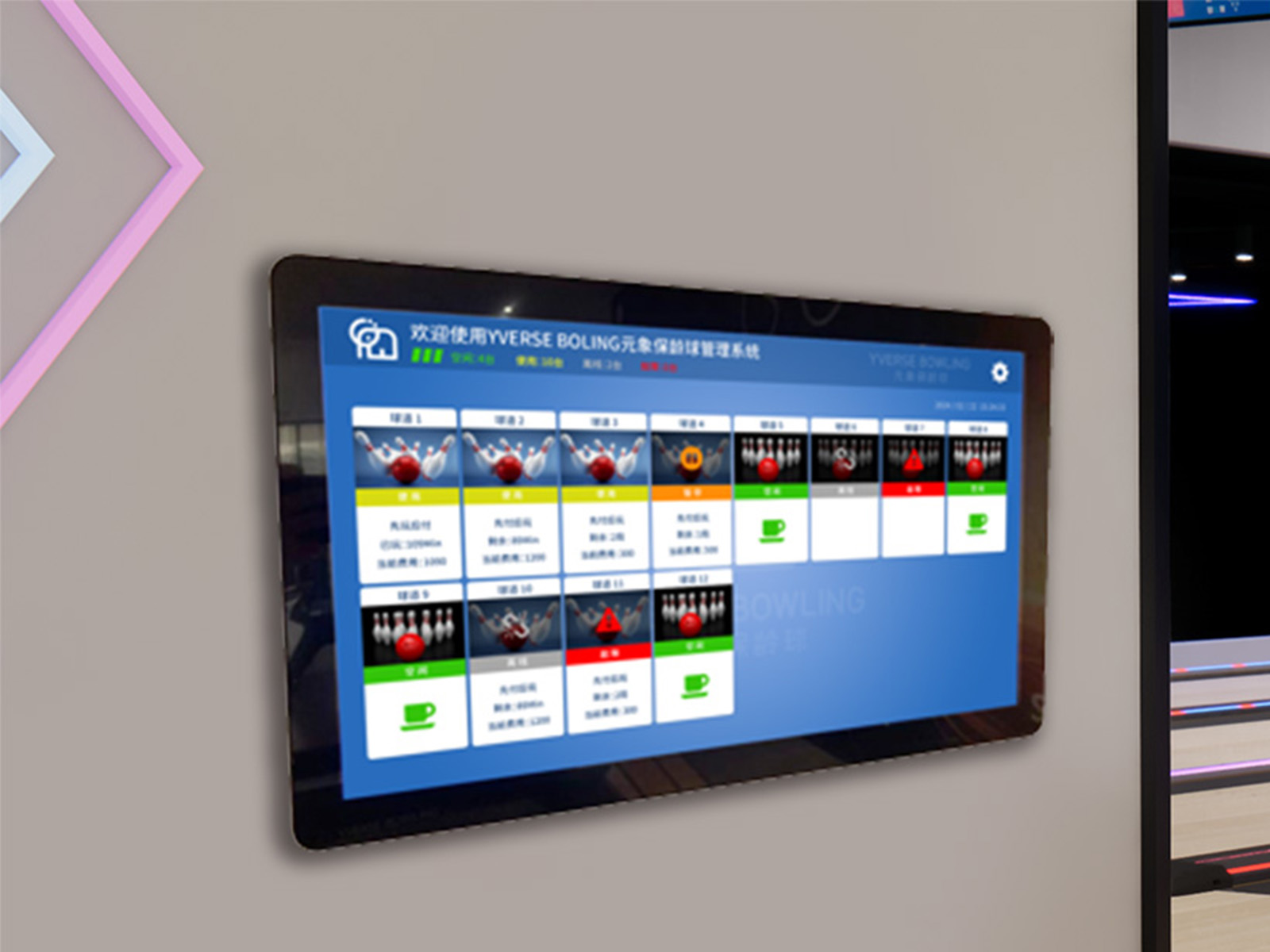
The scoring system combines camera-based image recognition with infrared sensing to detect pin status, including tilted and partially knocked-down pins. Published performance is up to 99.98% recognition accuracy with a 0.02% misread rate, plus lifetime free OTA software updates that keep the system current without a service visit. Game modes include featured tournaments and a PK system with local or remote cross-store online play, participation in officially organized national challenge tournaments, and the ability for venue stores and merchants to publish in-store challenge tournaments. For venues whose revenue depends on repeat competitive play, these modes are a commercial feature rather than a technical novelty.
Bowling pins
SunEye manufactures three pin formats. The Standard Bowling Pin is 380 mm tall and weighs 1,618 g; the Duckpin Bowling Pin is 230 mm and 787 g; the Mini Bowling Pin is 265 mm and 735 g. All three use maple wood and plastic, ship in carton boxes with a 40-day delivery time, and can be customized with pin colors, logos, graphics and patterns. They are available in sizes and configurations compatible with standard, duckpin and mini bowling systems.
Turnkey delivery, not just equipment
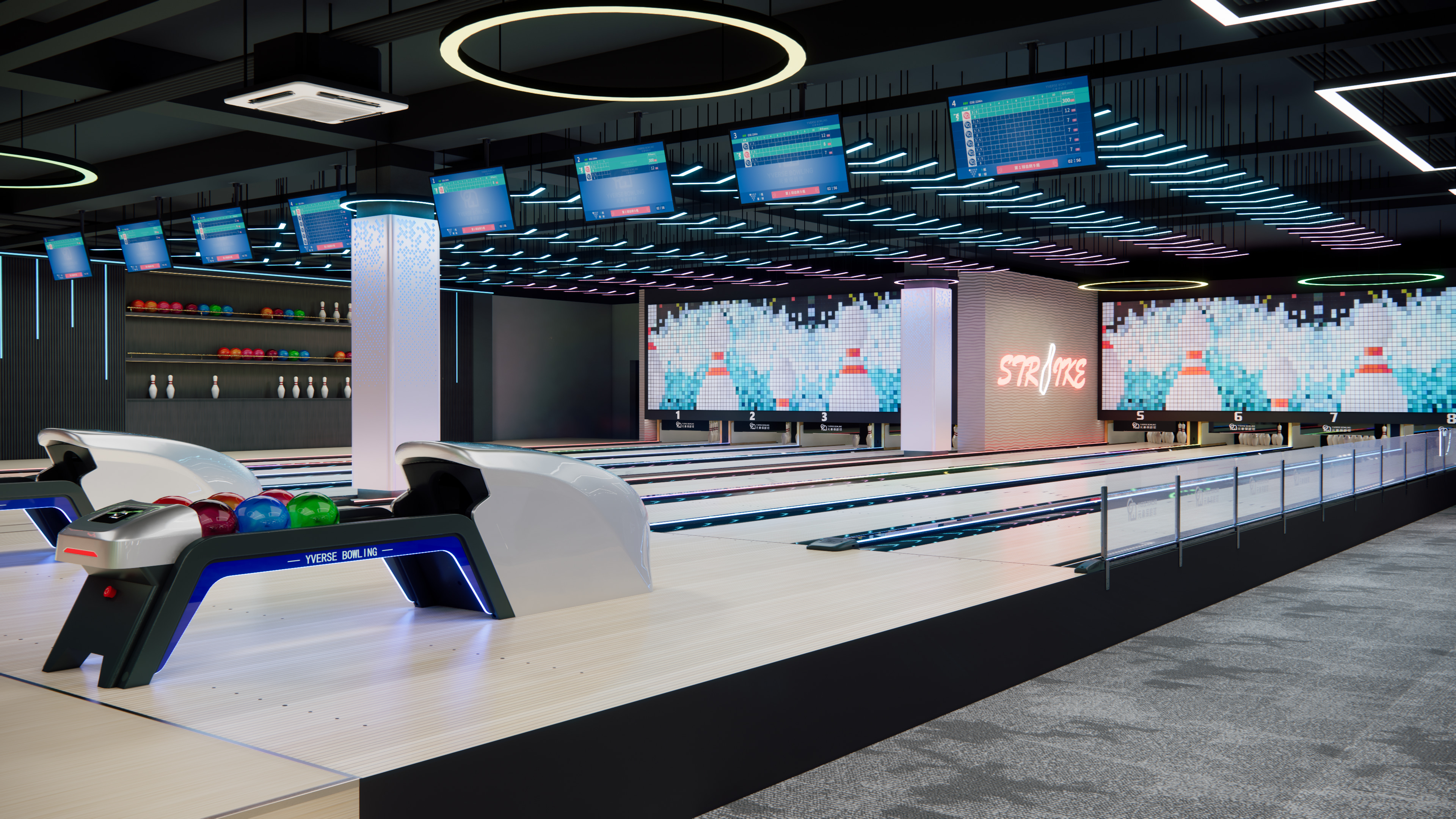
Component supply is only part of the offer. SunEye provides venue planning, CAD layout design, 3D rendering, equipment manufacturing, global shipping, installation guidance, commissioning, technical training and after-sales support. In practice the process starts with a floor plan: send yours and SunEye prepares a layout proposal, which becomes the working document for the project.
Step-by-Step Breakdown: From Empty Room to Operating Bowling Center
- Measure the space and record the constraints. Confirm usable lane length, ceiling height, floor loading, available power — SunEye's pinsetter and ball return are rated at 220 V and 2,000 W — and delivery access for long lane panels. Lane length decides the format before anything else is quoted.
- Select the bowling format. For venues with 26 m or more, standard bowling equipment is recommended; from 13 m, mini bowling equipment; from 10 m, duckpin bowling equipment. The choice should also follow your customer mix: league and competitive players, families and children, or social food-and-drink groups.
- Fix the component configuration. Agree the number of lanes, pinsetter type, lane structure, ball return layout and track length, and scoring display arrangement in writing. This is the step that makes later quotations comparable.
- Complete the layout design. Venue planning, CAD layout design and 3D rendering translate the specification into a buildable drawing covering lane position, equipment zone, walkways, seating and screen sightlines.
- Confirm documentation before manufacturing. Request the specification sheet, certification and compliance documentation, and packing details for every line item, and verify which certificate applies to which model.
- Coordinate shipping, installation and commissioning. Schedule installation and commissioning against site readiness — power, floor, environment — rather than against vessel arrival, and align it with customs classification work.
- Train staff and confirm after-sales support. Operator training on scoring, lane care and fault handling protects uptime in the first year, and it is the moment to confirm the OTA update path and spare-parts access.
Use Cases: Which Bowling Equipment Fits Which Venue
Commercial bowling centers and multi-lane entertainment complexes
These venues run long hours with mixed league and open-play traffic. Standard bowling equipment with string pinsetters, synthetic lanes rated for high impact volumes and a scoring system with tournament and PK modes fits the model. Continuous 24/7 rated operation, an eight-second pin reset and a 0.002% published ball return jam failure rate are the figures that translate most directly into revenue hours.
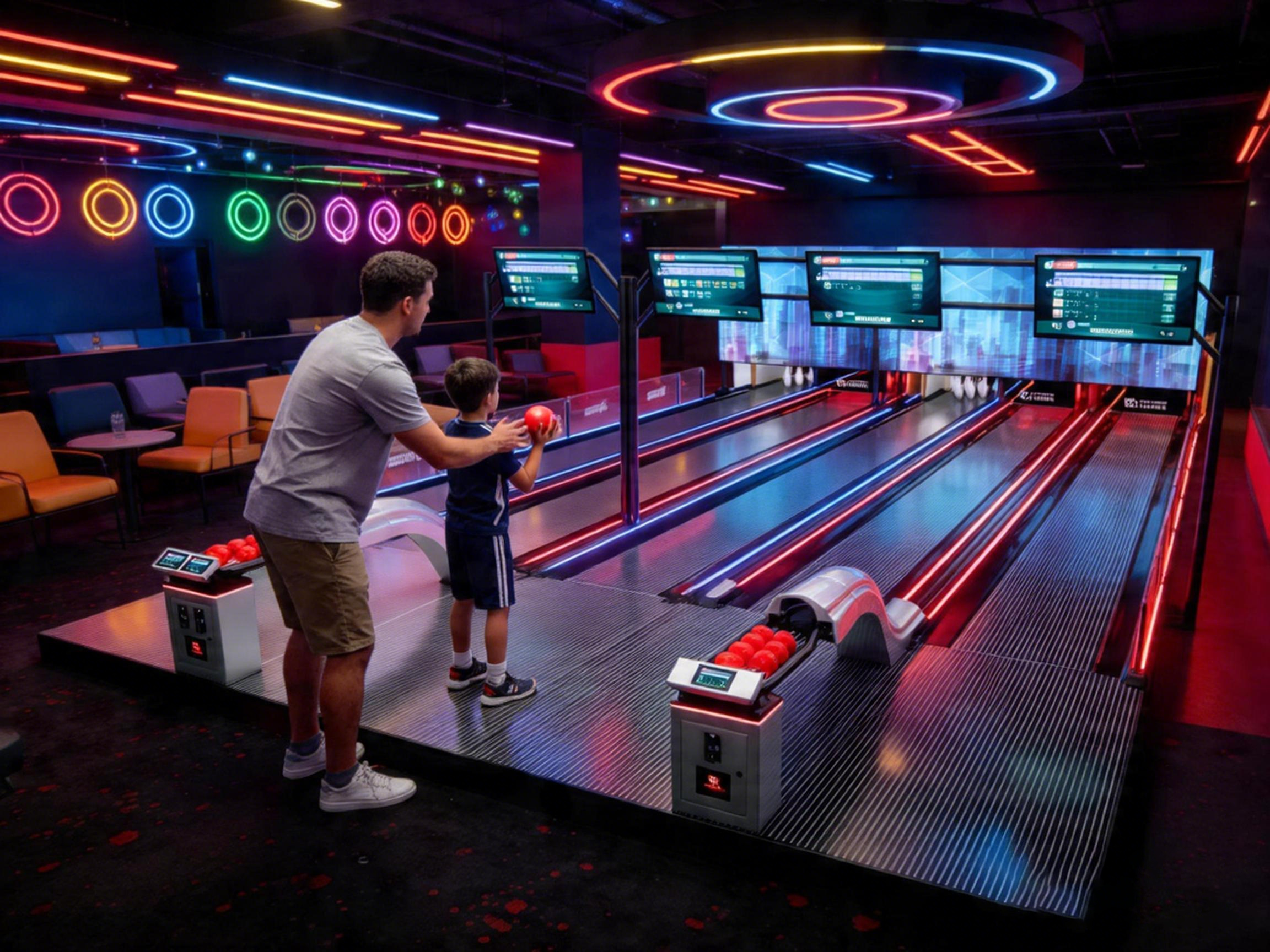
Family entertainment centers, malls and kids' venues
Mini bowling equipment fits here: a two-lane unit sized at L13 m × W2.83 m × H2.5 m with lane lengths from 13.6 to 19 m, balls of 3.3–3.75 pounds and mini pins, which keeps the game playable for children and casual visitors. It occupies far less floor space than a standard alley while still delivering the same core components — string pinsetter, ball return and scoring system.
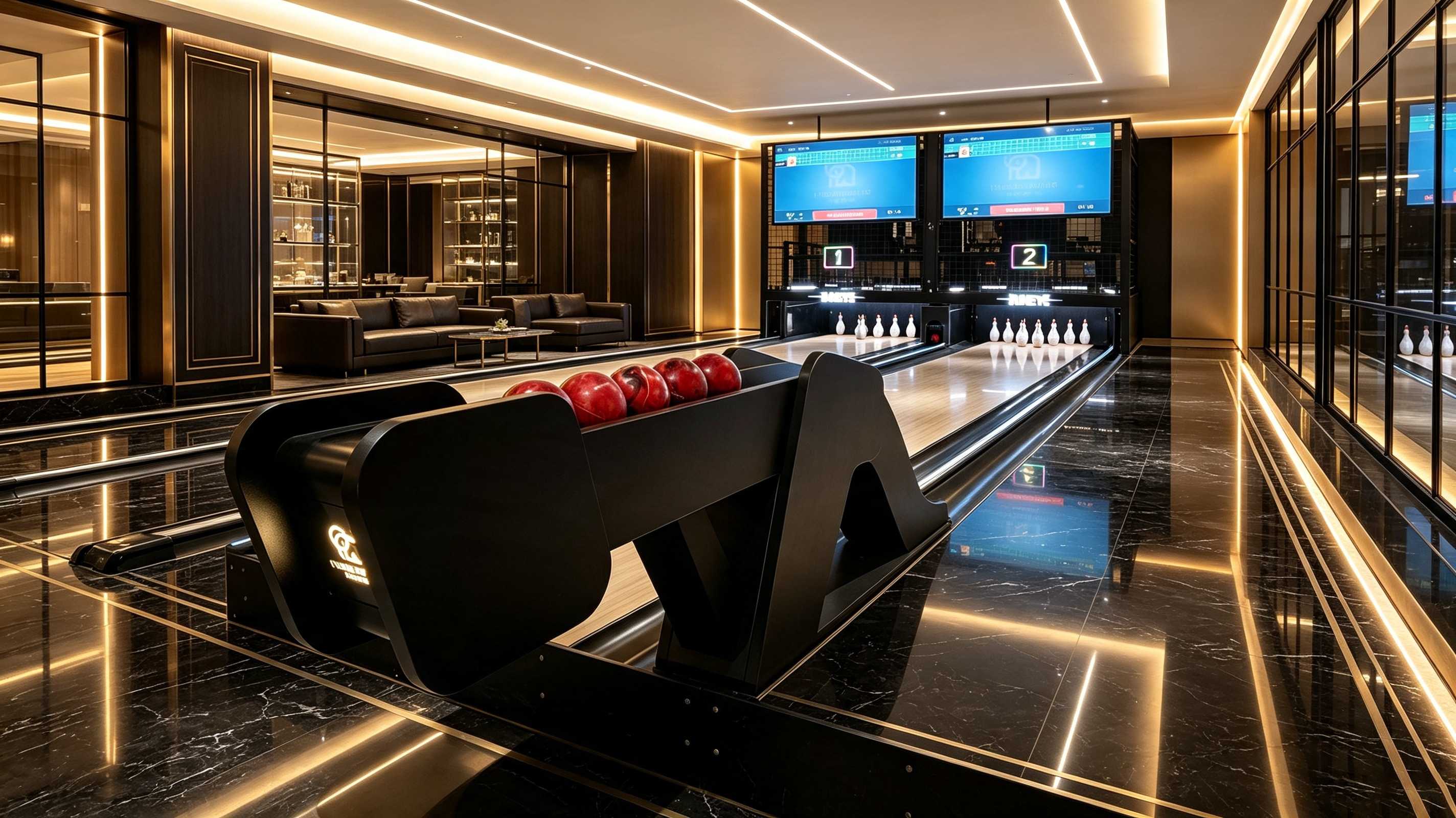
Bars, restaurants, hotels and social entertainment venues
Duckpin bowling equipment is designed around a compact social footprint: a two-lane unit of L10 m × W3.48 m × H2.4 m, rated 220 V and 2,000 W per lane, with a centralized scoring system integrated into the equipment zone so the combined structure can also serve as a visual backdrop behind the lanes. Space efficiency is the reason duckpin has become a common format for food-and-beverage-led venues that want a game, not a stadium.
Comparison Table: Standard vs Mini vs Duckpin Bowling Equipment
| Specification | Standard Bowling Equipment | Mini Bowling Equipment | Duckpin Bowling Equipment |
|---|---|---|---|
| System category | Standard Bowling System | Mini Bowling System | Duckpin Bowling System |
| Footprint (2 lanes) | L25.5 m × W3.5 m × H3.2 m | L13 m × W2.83 m × H2.5 m | L10 m × W3.48 m × H2.4 m |
| Lane length | Customizable, 17.5–25.5 m | Customizable, 13.6–19 m | 10 m |
| Ball weight | 8–11 lb | 3.3–3.75 lb | 3.3–3.75 lb |
| Pin type | Ten-pin bowling | Ten-pin mini bowling | Ten-pin duckpin bowling |
| Pinsetter style | String pinsetter bowling machine | String pinsetter bowling machine | String pinsetter bowling machine |
| Certification listed | USBC-Certified, CE, LVD, MD | USBC-Certified, CE, LVD, MD | USBC-Certified, CE, LVD, MD |
| Packing | Wooden box | Wooden box | Wooden box |
| Typical applications | Traditional bowling centers, league play, commercial bowling centers | Children's centers, FECs, malls, compact spaces | Bars, restaurants, FECs, social entertainment venues |
Core component specifications at a glance
| Component | Published specifications |
|---|---|
| String Pinsetter Machine | 2,000 W, 220 V; ten pins; pin reset 8 seconds or less; pin placement offset within 2 mm; servo control with smart calibration; continuous 24/7 operation |
| Synthetic Bowling Lane | Multi-layer high-density pressed panels; scratch-resistant coating; sealed edges; 100,000+ ball impacts; up to 10-year service life; USBC compliance testing stated for SunEye synthetic lanes |
| Ball Return System | 2,000 W, 220 V; 12-second return speed; return track 18–26 m (customizable); metal/acrylic; 0.002% jam failure rate |
| Scoring System | Camera image recognition plus infrared sensing; up to 99.98% recognition accuracy; 0.02% misread rate; lifetime free OTA updates; tournament and PK game modes |
| Bowling Pins | Standard 380 mm / 1,618 g; Duckpin 230 mm / 787 g; Mini 265 mm / 735 g; maple wood and plastic; carton box packing; 40-day delivery time |
Frequently Asked Questions
Are SunEye bowling lanes and pinsetters compliant with USBC requirements?
SunEye states that its synthetic bowling lanes have been tested and comply with applicable USBC requirements, and that SunEye Lane is approved for use during USBC-certified competition. The certification listed for the SunEye standard, mini and duckpin bowling systems and for the bowling pins includes USBC certification alongside CE, LVD and MD. Buyers planning sanctioned league play should confirm the approved status of the exact model and check the current USBC string pinsetter specification, which requires a minimum string length of 54 inches under USBC Chapter 95.
What types of bowling equipment can a China-based manufacturer such as SunEye supply?
SunEye's range covers the full component set for a bowling venue: standard bowling equipment, mini bowling equipment, duckpin bowling equipment, string pinsetter machines, synthetic bowling lanes, ball return systems, scoring systems and HD score displays, bowling pins in three formats, bowling balls, and related accessories, plus turnkey project services. For buyers comparing China bowling equipment manufacturers, the practical question is not only what a supplier sells, but whether pinsetter, lane, ball return and scoring come from one engineering team, because that is what removes the integration risk of a multi-vendor build.
How is bowling equipment priced, and why are quotes so different?
Bowling equipment pricing is configuration-dependent. Lane count, format (standard, mini or duckpin), lane length, pinsetter type, ball return track length, scoring architecture, display arrangement, site conditions and the scope of installation and training all change the number. Public list prices in this category are rare, and marketplace listings usually describe a single seller's configuration without stating scope, Incoterm or date, which is why two quotes for "bowling equipment" can differ dramatically and still both be internally consistent. The reliable method is to request quotations against one fixed specification so that only the commercial terms differ; SunEye's specification sheets state the parameters for each line item, which makes that comparison possible.
Can SunEye provide a layout design before we commit to an order?
Yes. Send your floor plan and SunEye will prepare a layout proposal. In a full turnkey project the planning stage covers venue planning, CAD layout design and 3D rendering before manufacturing, followed by equipment manufacturing, global shipping, installation guidance, commissioning, staff training and after-sales support. That design step is also the most economical way to test feasibility, because it shows whether your lane length, ceiling height and equipment zone work before a purchase order is placed.
What are the delivery times for SunEye bowling equipment?
The documented delivery time for SunEye bowling pins is 40 days, with carton box packing; the standard, mini and duckpin equipment lines are shipped in wooden boxes. Project-level lead time is not a single figure, because it depends on the number of lanes, the configuration and site readiness — power, floor condition, environment and installation scheduling all affect when a venue can open. Agree the delivery schedule per line item and the installation sequence in the same contract, and factor customs classification into that plan: in the U.S. tariff schedule, parts and accessories for bowling pin setter machines fall under subheading 9504.90.9060 at a free rate of duty. To start, send the SunEye team your floor plan and target opening date, or download the company profile for the full product and service list.
Conclusion
Bowling equipment is a systems purchase. The format decision — standard, mini or duckpin — follows from the lane length your building can support, and the equipment decision follows from how the pinsetter, lane, ball return and scoring system perform together over years of commercial traffic. A pinsetter rated at eight seconds per reset and 24/7 operation, a lane rated for more than 100,000 ball impacts, a ball return with a published 0.002% jam failure rate and a scoring system with 99.98% recognition accuracy are not marketing headlines; they are the operational numbers that determine how many hours a week your lanes are actually playable.
For buyers at the research stage, the practical sequence is to document the space, fix the format, write the specification, and only then compare suppliers against that specification. Suppliers who can supply the whole stack — pinsetter, lane, ball return, scoring, pins and turnkey delivery — reduce the number of interfaces you have to manage on site, and suppliers who publish parameters make their quotations comparable.
Next Step: Send Us Your Floor Plan
SunEye Bowling supplies standard, mini and duckpin bowling equipment, string pinsetter machines, bowling lanes, ball return systems, scoring systems and pins, together with turnkey venue delivery. To receive a layout proposal and a configuration-based quotation:
- Email: inquiry@suneyebowling.com
- Tel / WhatsApp: +86 181-2743-1080
- Website: www.suneyebowling.com
- Company profile (PDF): Download the SunEye Company Profile
Office: 6th Floor, Fengbang Industrial Park, No. 16 Lianyun Yiheng Road, Guangzhou, China. Factory: No. 1, Shilonggang Road, Dalong Village, Dalong Street, Panyu District, Guangzhou, China.
Have Questions or Need More Details?
Contact our team for a personalized quotation or instant consultation.
Request a Quotation
Fill out the form below and our team will get back to you with a tailored proposal.
WhatsApp Direct Chat
Prefer to chat in real-time? Message us on WhatsApp for instant assistance & quick answers.
- Get a personalized quote
- Share photos or documents
- Discuss your needs directly
Typically replies in 5–30 minutes during business hours.