
Bowling Equipment: A Complete Discovery Guide for Buyers
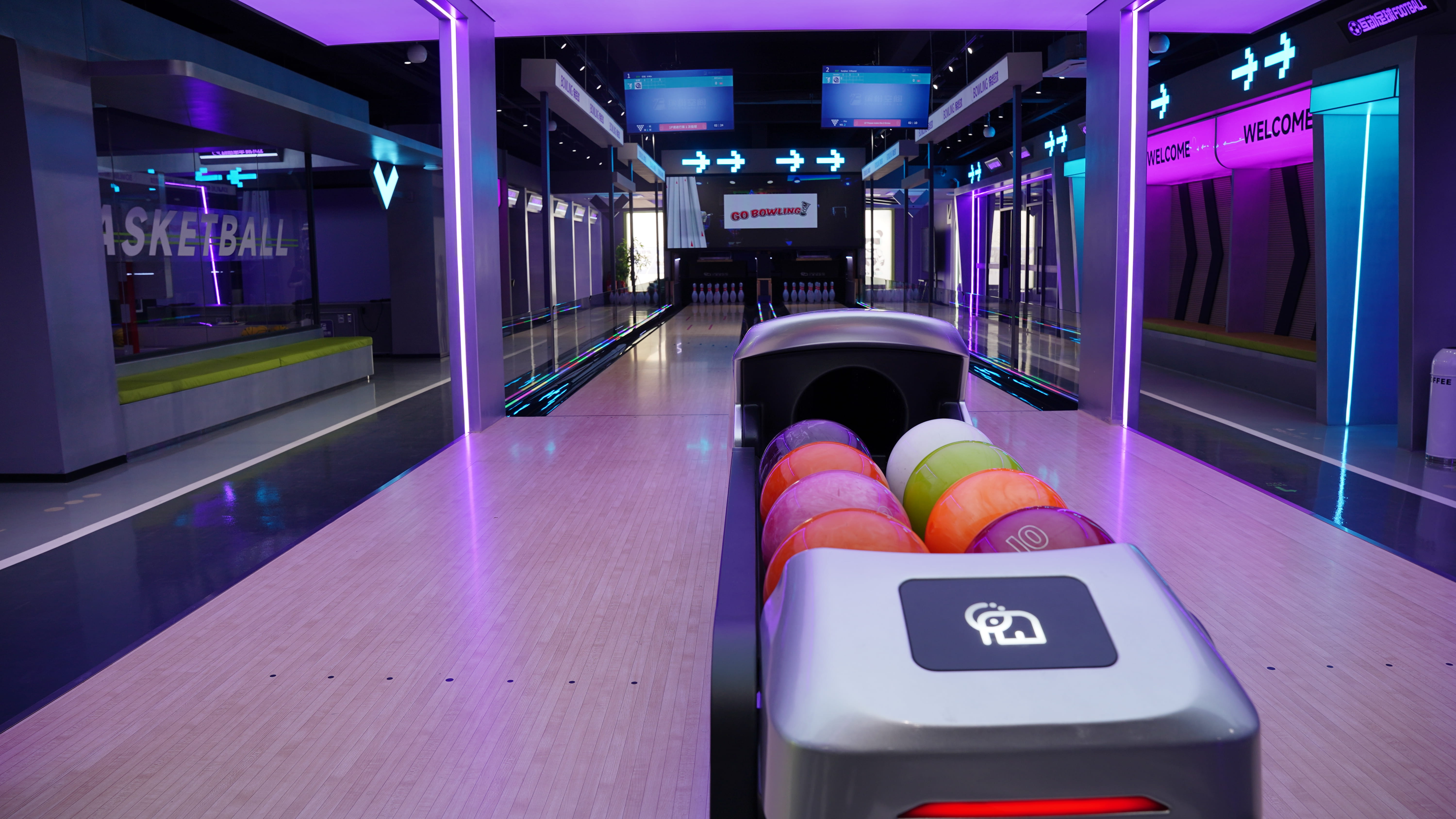
Bowling equipment is the complete mechanical system that turns an empty indoor space into an operating bowling venue. It is not one machine. A working installation combines a bowling lane, a pinsetter, a ball return system, an automatic scoring system, and the consumables — pins and balls — that the venue keeps replacing over its lifetime. Because these components are usually specified and purchased together, knowing the full list before you contact a supplier is what makes competing quotations comparable.
Three variables decide what a project can actually become: the usable length of the site, the customers the venue intends to serve, and the business model behind it. Lane count, pinsetter type and scoring architecture all follow from those three.
Why Bowling Equipment Research Stalls at the First Quote
First-time buyers typically approach a supplier with a floor plan and a budget figure but no equipment schedule. Three quotations then arrive covering three different scopes: one prices lanes alone, another includes pinsetters and scoring, a third bundles installation and training. None of them can be compared line by line.
The second obstacle is format. Bowling equipment is not one product category. The same building can support a standard ten-pin installation, a compact mini bowling system, or a duckpin configuration — and the choice is largely dictated by how much straight, uninterrupted length the site offers.
Until those two questions are settled, price comparison is guesswork. That is why the most useful early deliverable is not a quotation but a component list with dimensions attached.
Where Bowling Equipment Demand Comes From
Bowling is a target sport and recreational activity in which a player rolls a ball toward pins or another target. That broad definition matters commercially, because it covers traditional ten-pin centres, compact mini bowling installations in family venues, duckpin lanes in bars and restaurants, and a widening set of hybrid entertainment formats.
On the hardware side, HTF Market Intelligence estimates the global bowling equipment market at USD 1.05 billion in 2025, with a forecast of USD 1.78 billion by 2033 and a compound annual growth rate of 6.0% across 2026–2033. That figure is scoped to equipment — balls, pins, lanes and scoring systems — rather than venue operator revenue, which makes it the more relevant reference point for anyone sourcing hardware.
For importers there is also a practical customs dimension. Under the United States Harmonized Tariff Schedule, the applicable subheading for bowling pin setter machines and their parts or accessories is 9504.90.9060, at a duty rate of free. Buyers planning a first shipment should confirm that classification before freight is quoted.
A Complete Bowling System Is Built From Six Core Components
Suppliers describe the same installation in different ways, which is why a component-level checklist is the fastest route to a comparable quotation. A commercial bowling system breaks down into six parts.
1. Bowling Lane
The lane is the surface the ball travels on. Commercial synthetic lanes are built from multi-layer high-density pressed panels with a scratch-resistant surface coating and sealed edges, a construction designed to resist peeling, cracking and deformation under continuous use. Published durability figures for this build include 100,000+ ball impacts and a service life of up to 10 years.
Lane length is not a design preference — it is the primary constraint. Standard bowling lanes run approximately 26 metres, mini bowling lanes approximately 13 metres, and duckpin lanes approximately 10 metres. Site feasibility is usually decided in the first five minutes of a review, and everything else is designed around that number.
For venues that intend to host sanctioned competition, lane compliance is a separate question from lane quality. SunEye synthetic bowling lanes have been tested and comply with applicable USBC requirements, meet relevant USBC standards for bowling lane performance and specifications, and are approved for use during USBC-certified competition.
2. Bowling Pinsetter Machine
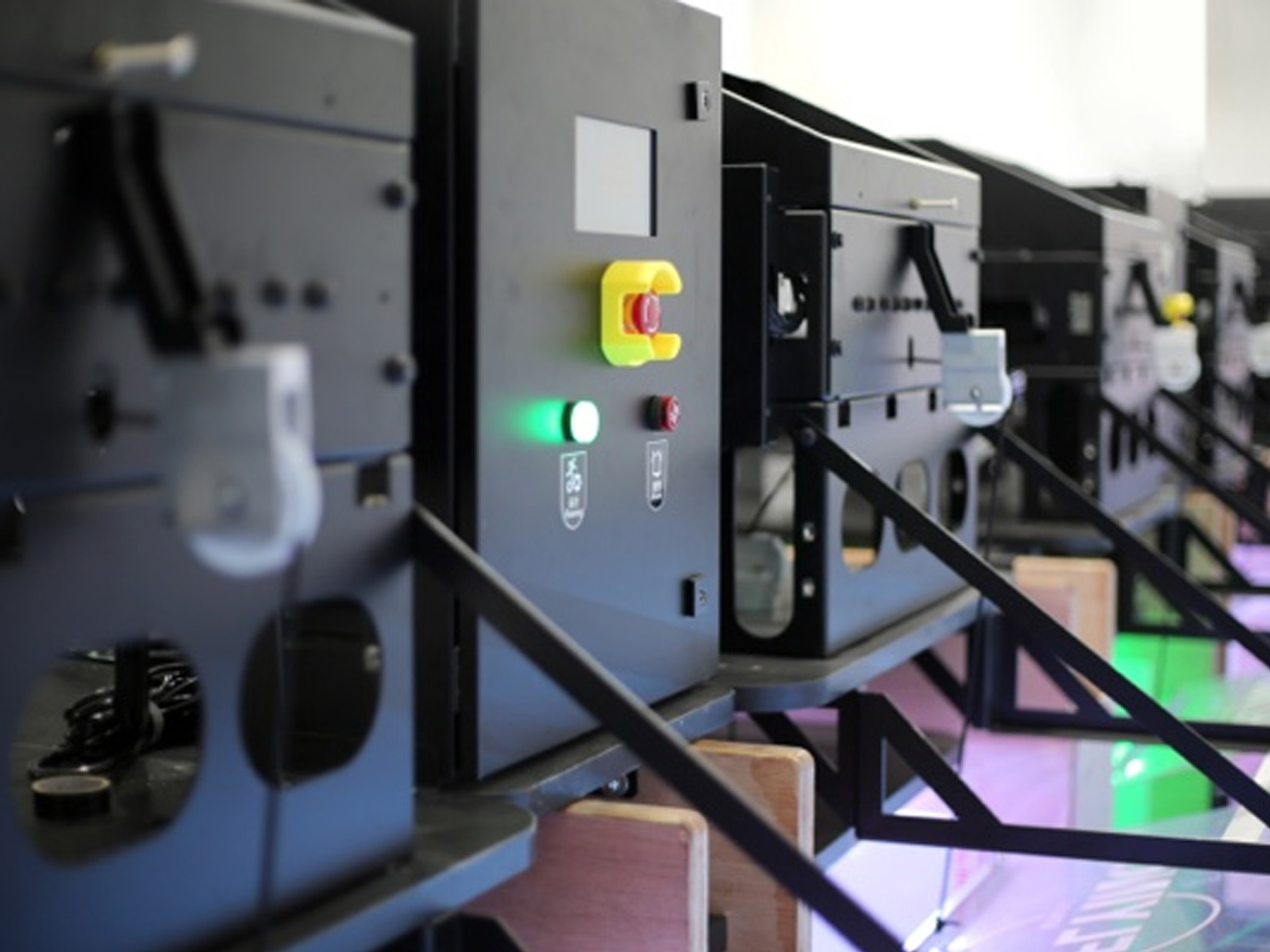
The pinsetter resets the pins after each ball. Two technology families exist: traditional free-fall pinsetters and string pinsetters. A string pinsetter uses a simpler mechanical structure with fewer moving parts, which reduces downtime and long-term maintenance requirements.
Certification affects the specification directly. Under USBC Chapter 95, approved string pin machines use longer strings — 54 inches — to simulate free-fall action while minimising tangles. That single number is worth checking on any string pinsetter quotation intended for sanctioned play.
On the SunEye String Pinsetter Machine, the published operating parameters are 2000 W at 220 V, a ten-pin configuration, and a pin reset cycle of 8 seconds. Control is servo-motor based with smart calibration, which detects and corrects minor positioning errors before they affect play, holding pin placement offset to no more than 2 mm. The machine is built from metal and is specified for continuous 24/7 operation.
3. Ball Return System
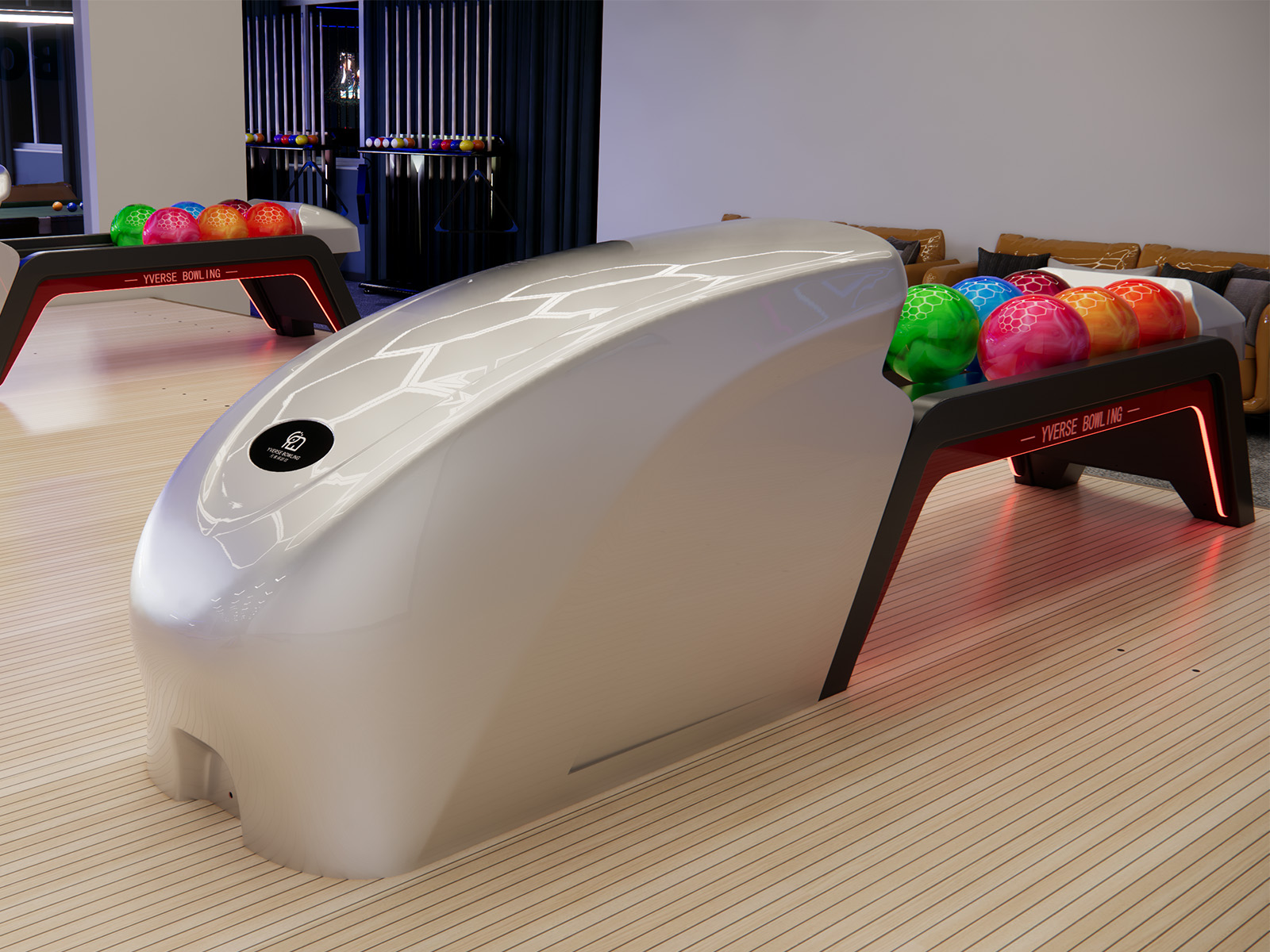
The return system moves the ball from the pit back to the player. Published parameters for the SunEye Bowling Ball Return System are 2000 W at 220 V, a return speed of 12 seconds, and a return track length of 18–26 m that can be customised. The unit is constructed from metal and acrylic.
Reliability here is measured as a jam failure rate. The SunEye ball return system is specified at 0.002%, against a typical industry range of 0.02%–0.05%. Flexible drive components and cushion guides keep transport stable and quiet, while built-in self-diagnostic logic clears minor jams automatically instead of waiting for staff intervention.
4. Automatic Bowling Scoring System
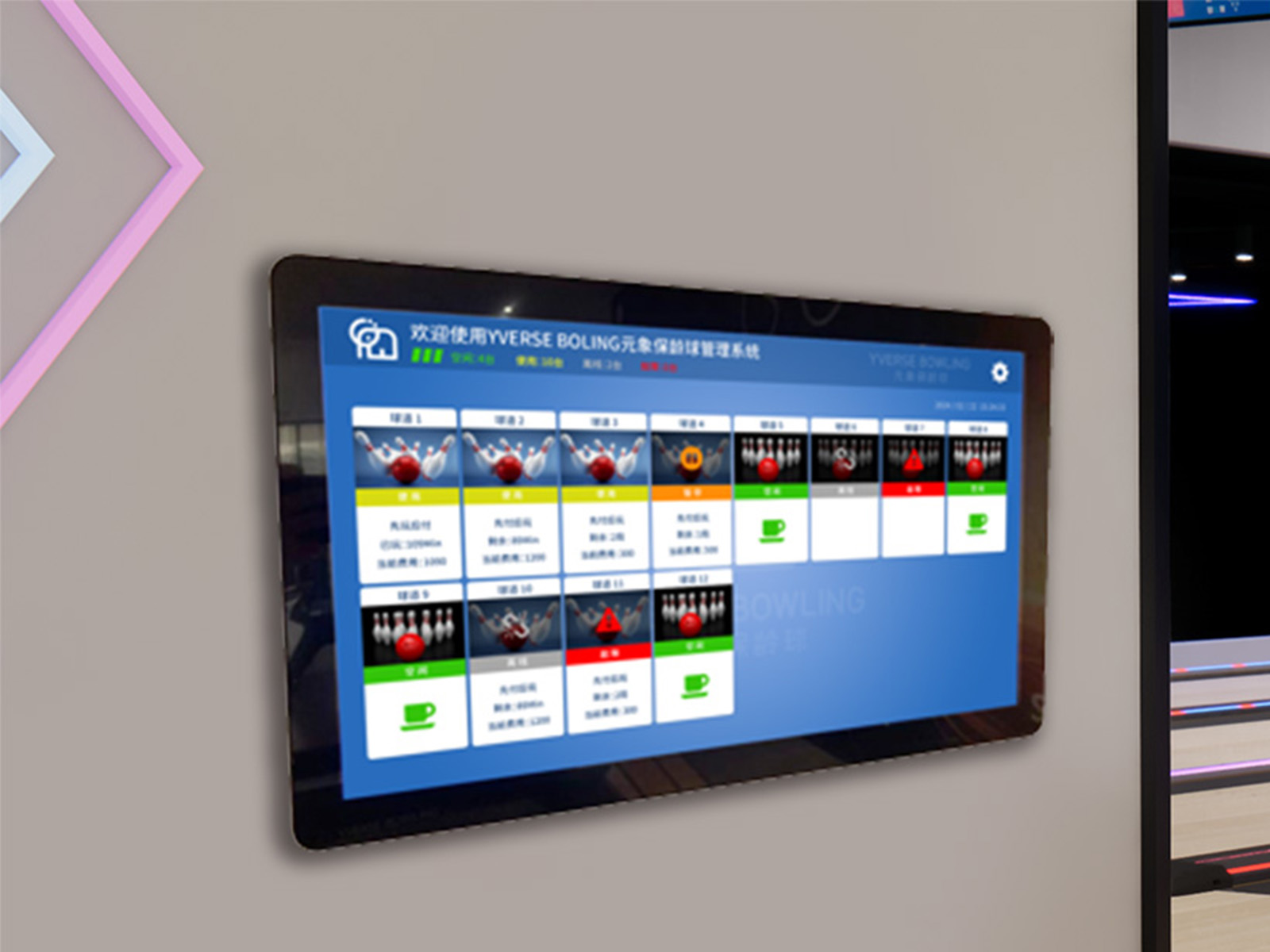
Modern scoring systems detect pin states electronically rather than relying on manual input. The SunEye Scoring System combines camera-based image recognition with infrared sensing — a dual-sensor approach that identifies difficult conditions such as slightly tilted or partially fallen pins. Published performance is up to 99.98% recognition accuracy with a 0.02% misread rate.
The scoring display supports tournament and PK game modes, including local or remote cross-store online competition, participation in organised national challenge tournaments, and in-store challenge events published by venue operators. Display resolution is 1280 × 720, and the software is maintained through lifetime free OTA updates.
Display hardware scales with the bowling format. Mini bowling configurations integrate a gantry-mounted 43-inch HD display, while duckpin configurations use a 65-inch HD display combined with the pinsetter inside a single compact equipment zone — a layout that also lets the display serve as a visual backdrop behind the lanes.
5. Bowling Pins
Pins are a consumable, and three sizes map to the three bowling formats. Standard Bowling Pin: 380 mm, 1618 g. Duckpin Bowling Pin: 230 mm, 787 g. Mini Bowling Pin: 265 mm, 735 g.
All three are made from maple wood and plastic, and carry USBC certification alongside CE, LVD and MD compliance. They ship in carton box packaging with a stated delivery time of 40 days, and can be customised with pin colours, logos, graphics and patterns to match a venue brand.
6. Bowling Balls
Ball weight tracks the format. Standard bowling systems use balls of 8–11 pounds, while mini bowling and duckpin systems use balls of 3.3–3.75 pounds. The lighter ball is what makes duckpin and mini formats practical for children, casual players and mixed social groups.
Standard, Mini and Duckpin Bowling Equipment Compared
The three systems share one architecture — lane, pinsetter, ball return, scoring — but the specifications diverge sharply. The table below uses published product parameters so that format selection can be made against numbers rather than impressions.
| Parameter | Standard Bowling Equipment | Mini Bowling Equipment | Duckpin Bowling Equipment |
|---|---|---|---|
| Typical lane length | Approx. 26 m | Approx. 13 m | Approx. 10 m |
| System footprint (2 lanes) | L 25.5 m × W 3.5 m × H 3.2 m | L 13 m × W 2.83 m × H 2.5 m | L 10 m × W 3.48 m × H 2.4 m |
| Customisable lane length | 17.5 – 25.5 m | 13.6 – 19 m | — |
| Ball weight | 8 – 11 lb | 3.3 – 3.75 lb | 3.3 – 3.75 lb |
| Pin type | Ten-pin | Ten-pin mini bowling | Ten-pin duckpin |
| Pinsetter style | String pinsetter | String pinsetter | String pinsetter |
| Rated voltage | — | — | 220 V |
| Rated power per lane | — | — | 2000 W |
| Certification | USBC, CE, LVD, MD | USBC, CE, LVD, MD | USBC, CE, LVD, MD |
| Packing | Wooden box | Wooden box | Wooden box |
The key difference between standard, mini and duckpin bowling is lane length. For venues with 26 metres or more, standard bowling equipment is the fit. For venues with 13 metres or more, mini bowling equipment is the fit. For venues with 10 metres or more, duckpin bowling equipment is the fit. The selection ultimately depends on available space, target customers and business model.
Where Bowling Equipment Is Installed
Format choice usually follows venue type rather than the other way round.
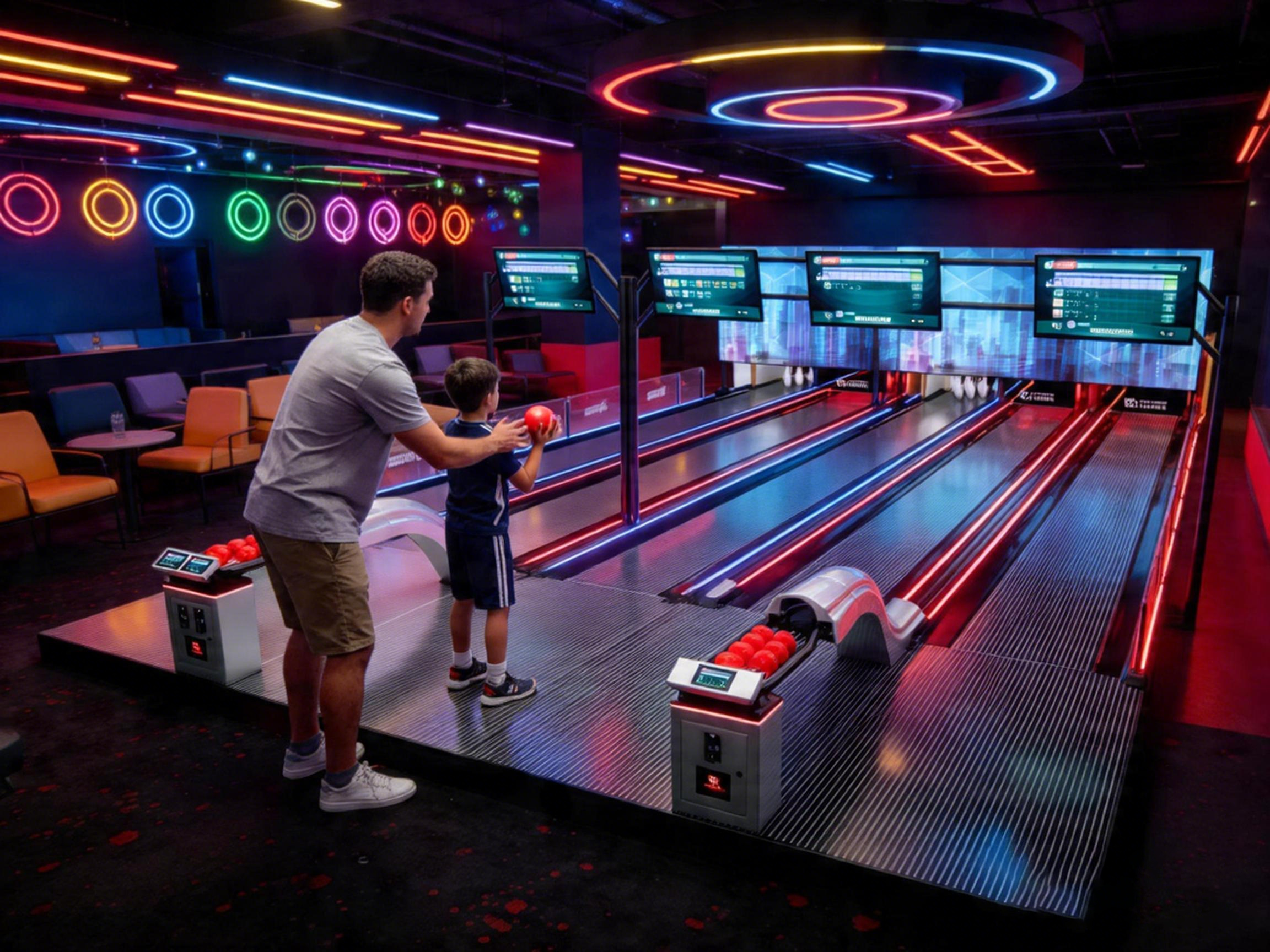
Standard bowling equipment serves traditional bowling centres, league play and larger entertainment complexes where a 26-metre run of uninterrupted length is available. Mini bowling equipment suits family entertainment centres, kids venues, shopping malls and compact sites where roughly 13 metres is the practical ceiling. Duckpin bowling equipment is built for bars, restaurants, breweries, FECs and social entertainment venues, where a 10-metre footprint and a lighter ball keep the game fast and approachable.
All three formats are designed for indoor, climate-controlled, dry environments and are specified for 24/7 operation. They are delivered as matched systems — string pinsetter system, ball return system and scoring system working as one unit rather than as separately sourced machinery.
From Floor Plan to Opening Day: A Step-by-Step Breakdown
Step 1 — Measure the usable run
Record the longest uninterrupted straight distance in the space. 26 metres or more points to standard bowling equipment; 13 metres or more points to mini bowling equipment; 10 metres or more points to duckpin bowling equipment. Below 10 metres, none of the three formats fits.
Step 2 — Match the format to the audience
A league-focused venue and a shopping-mall entertainment concept need different equipment even when the floor area is identical. Mini and duckpin formats exist precisely because the standard format does not serve every audience.
Step 3 — Decide lane count and layout
Lane count drives the number of pinsetters, ball return runs and scoring terminals. This is the step where a revenue model should be tested before equipment is ordered, not after.
Step 4 — Request CAD layout design
Send the site drawing or CAD file to the supplier. Venue planning, CAD layout design and 3D rendering are standard parts of a turnkey bowling solution, and they are far cheaper to revise than installed equipment.
Step 5 — Confirm compliance requirements early
Establish whether the venue will host sanctioned league play. If it will, USBC-related requirements must be confirmed at specification stage rather than resolved after installation.
Step 6 — Fix the scope of supply in writing
Separate equipment supply, freight, installation, commissioning, staff training and after-sales support into distinct line items. Where components carry published delivery times — bowling pins, for example, are listed at 40 days in carton box packaging — carry those figures through into the contract.
Step 7 — Inspect before handover
Acceptance inspection should include USBC compliance testing for synthetic lanes where applicable, together with a functional check of pinsetter cycle time, ball return speed and scoring accuracy.
Compliance and Standards Buyers Should Verify
Equipment compliance is the most common gap between a competitive quotation and a usable installation. Four items cover the majority of first-project risk.
- USBC — string pinsetters. Chapter 95 specifies a minimum string length of 54 inches for approved string pin machines, which is how the equipment simulates free-fall action while limiting tangles.
- USBC — synthetic lanes. SunEye synthetic bowling lanes have been tested and comply with applicable USBC requirements, meet relevant USBC standards for lane performance and specifications, and are approved for use during USBC-certified competition. Acceptance inspection includes USBC compliance testing.
- CE, LVD and MD. European conformity requirements apply across standard, mini and duckpin bowling systems, and equally to bowling pins.
- Customs classification. For US imports, bowling pin setter machines and their parts or accessories fall under HTS subheading 9504.90.9060 at a duty rate of free.
About the Manufacturer Behind This Guide
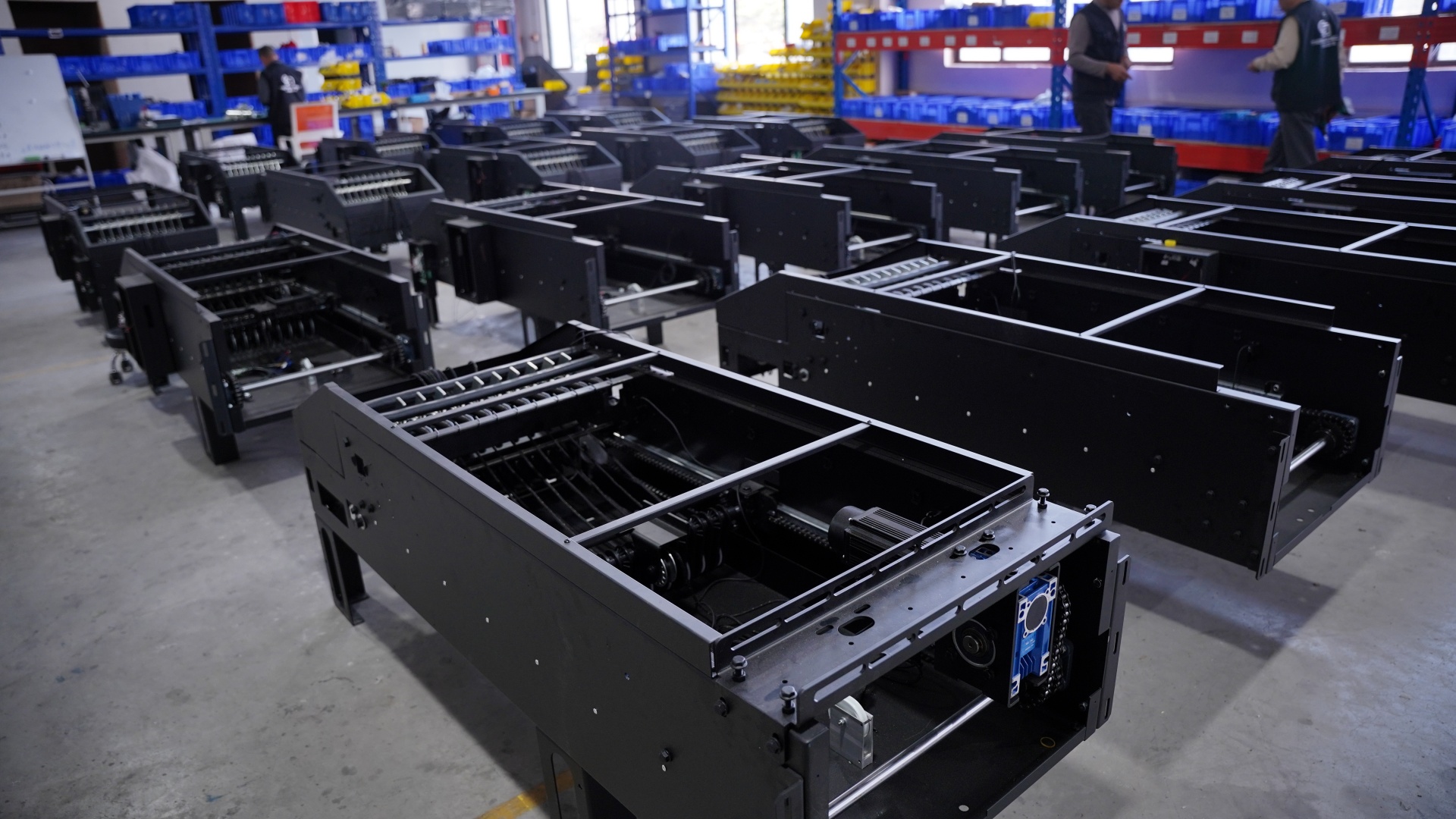
SunEye Bowling operates as YUANXIANG BOWLING (GUANGZHOU) CO., LTD, established in 2021 and based in Guangzhou, China. The company runs a 6,000 m² production base with a workforce of over 100 employees and publishes an annual production capacity of 2,000 units. Its R&D team comprises more than 20 engineers working across hardware and software development, electromechanical engineering, intelligent interaction and system integration.
Approximately 80% of products are exported, with sales serving markets worldwide. The product range covers standard bowling equipment, mini bowling equipment and duckpin bowling equipment, alongside string pinsetters, bowling lanes, ball return systems, scoring systems, bowling pins and bowling balls.
Beyond equipment supply, SunEye provides turnkey bowling solutions covering venue planning, CAD layout design, 3D rendering, equipment manufacturing, global shipping, installation, staff training and after-sales support. Buyers working from a site drawing can request a layout proposal before committing to any equipment configuration.
Frequently Asked Questions
What is included in a complete bowling equipment system?
A complete bowling equipment system consists of six parts: a bowling lane, a pinsetter, a ball return system, an automatic scoring system, bowling pins and bowling balls. Lane length determines the format — standard bowling requires roughly 26 metres, mini bowling roughly 13 metres, and duckpin bowling roughly 10 metres. Because these components operate as one matched system, a quotation that prices lanes without pinsetters and scoring cannot be compared directly against a full-system quotation.
What certifications and compliance requirements apply to bowling equipment?
Compliance depends on the target market and the intended use. USBC Chapter 95 sets a minimum string length of 54 inches for approved string pin machines used in sanctioned play, and USBC also defines performance and specification standards for synthetic bowling lanes. SunEye synthetic bowling lanes have been tested and comply with applicable USBC requirements and are approved for USBC-certified competition. For European markets, standard, mini and duckpin bowling systems and bowling pins carry CE, LVD and MD conformity. For US imports, bowling pin setter machines and their parts or accessories are classified under HTS subheading 9504.90.9060 at a duty rate of free.
Can a supplier build a bowling center from scratch?
Yes. A turnkey bowling solution covers venue planning, CAD layout design, 3D rendering, equipment manufacturing, global shipping, installation, staff training and after-sales support. The buyer supplies site drawings or CAD drawings, and the layout is planned against the actual building. Because turnkey scope varies between suppliers, the quotation should be split into equipment supply, freight, commissioning, training and after-sales support rather than accepted as a single bundled figure.
What are the minimum space requirements for bowling installation?
Space requirements vary by bowling type. Standard bowling needs approximately 26 metres of straight run, mini bowling approximately 13 metres, and duckpin bowling approximately 10 metres. For a two-lane system, the full footprint is L 25.5 m × W 3.5 m × H 3.2 m for standard bowling, L 13 m × W 2.83 m × H 2.5 m for mini bowling, and L 10 m × W 3.48 m × H 2.4 m for duckpin bowling. Standard lane length can be customised between 17.5 and 25.5 metres, and mini lane length between 13.6 and 19 metres.
Why do buyers consider China bowling equipment manufacturers?
Chinese bowling equipment manufacturers are generally export-oriented, so product ranges, documentation and delivery processes are structured around international projects. SunEye Bowling is one example: the company is based in Guangzhou, China, exports approximately 80% of its products, and supplies standard, mini and duckpin bowling systems together with string pinsetters, bowling lanes, ball return systems and scoring systems. Any manufacturer should be assessed on published parameters, certification documents and written scope of supply rather than on positioning claims. Buyers can request the company profile or a project-specific quotation to obtain confirmed specifications for their site.
Conclusion
Bowling equipment decisions are made in a fixed order. First the usable length of the site, which determines whether the project can be standard, mini or duckpin. Then the audience, which determines ball weight, lane count and display size. Then the component list — lane, pinsetter, ball return, scoring, pins, balls — which determines whether two quotations are actually comparable. Compliance and customs classification should be settled alongside those steps, not after the equipment arrives.
Get that sequence right and the specification nearly writes itself. Skip it, and the project will spend its first months renegotiating scope instead of opening lanes.
Planning a Bowling Venue?
Send your floor plan or CAD drawing to SunEye Bowling for a free layout proposal, confirmed specifications and a project quotation covering standard, mini or duckpin bowling equipment.
Download the SunEye Company Profile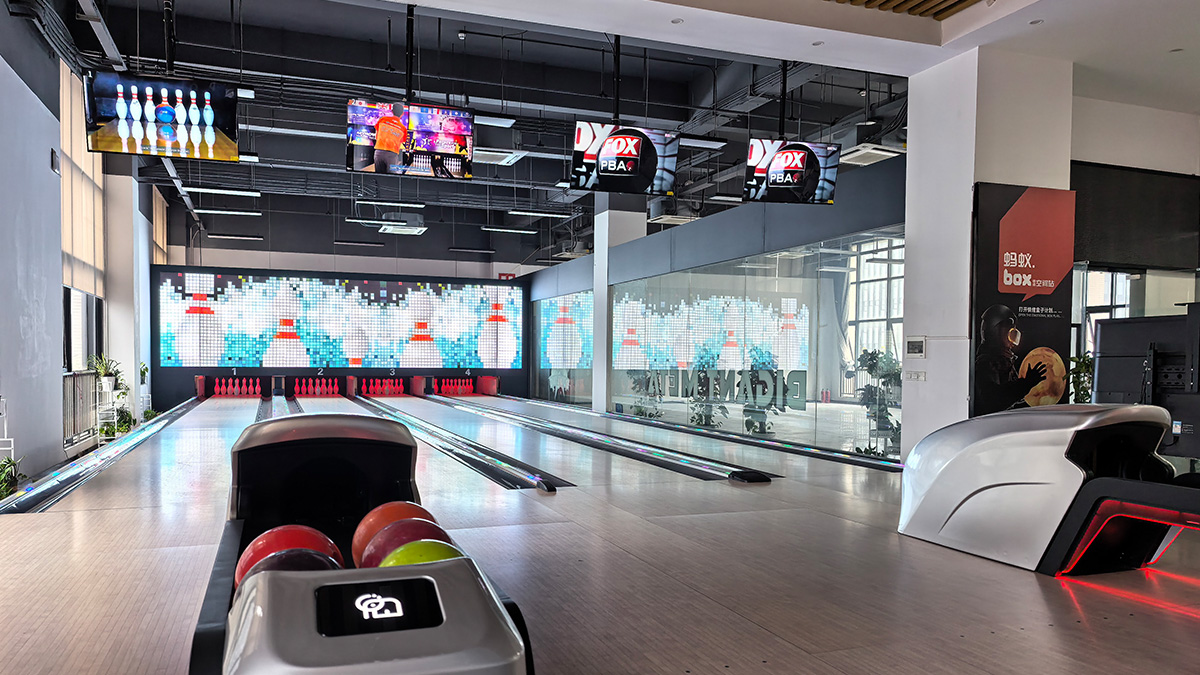
Contact SunEye Bowling: inquiry@suneyebowling.com | Tel / WhatsApp: +86 181-2743-1080 | www.suneyebowling.com
Have Questions or Need More Details?
Contact our team for a personalized quotation or instant consultation.
Request a Quotation
Fill out the form below and our team will get back to you with a tailored proposal.
WhatsApp Direct Chat
Prefer to chat in real-time? Message us on WhatsApp for instant assistance & quick answers.
- Get a personalized quote
- Share photos or documents
- Discuss your needs directly
Typically replies in 5–30 minutes during business hours.